

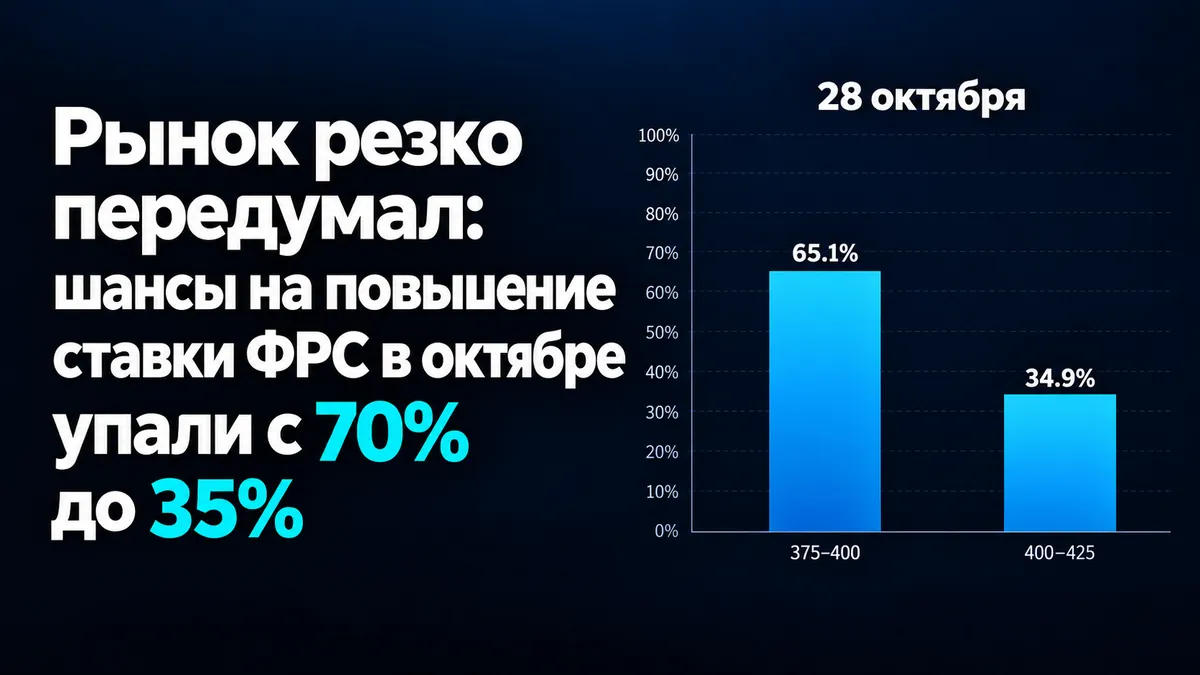
After the August PCE inflation report, expectations for the October 27-28 Fed meeting changed dramatically. The probability of a rate hike, which exceeded 70% at the start of the week, fell to roughly 35-37% by the end of September 30. CME FedWatch showed the probability of a hike at 37.1%, and the probability of keeping the rate unchanged at 62.9%.
What CME FedWatch shows
CME FedWatch is a CME exchange tool that calculates the probability of Fed decisions based on interest rate futures prices. This is not a single analyst's forecast. The indicator reflects how market participants currently assess possible regulator decisions through their positions. A sharp drop in the probability of a hike means that after the new data, market participants began to count significantly less on policy tightening already in October.
What became the trigger
The main reason was the August PCE data. Core PCE rose 3.0% year over year, which turned out to be below the expected 3.3%. The monthly figure was 0.2% versus the forecast of 0.3%. After the publication, the probability of an October rate hike fell to about 35% from around 68% earlier in the week. Investor's Business Daily PCE is one of the key inflation indicators that the Fed relies on when making rate decisions.
Banks are also changing forecasts
Against the backdrop of softer inflation data, Goldman Sachs moved its expected next Fed rate hike from October to December. The point of the change is that the nearest meeting is now no longer perceived as the moment when the Fed must necessarily raise rates again. At the same time, the market still allows for further policy tightening later in 2026. Reuters notes that after the data release, futures showed roughly a one-in-three chance of a hike in October, while expectations for a hike by the end of the year persisted.
Why this matters for the market
Rate expectations directly affect the cost of money and therefore are reflected immediately across several markets. In the spotlight:
- the dollar;
- gold;
- US stock indices;
- government bond yields;
- BTC and other cryptocurrencies.
When the probability of a Fed decision changes so sharply even before the meeting, market movement can occur not only on the day of the rate decision. Every new report on inflation, employment, or business activity can change these expectations again.
What's next
The next Fed meeting is scheduled for October 27-28. Before then, the market will receive new data on inflation and the labor market, so the probability of a rate hike may still change noticeably. The current 35-37% is not a final forecast of the meeting outcome, but a reflection of market expectations at the moment.
Did you see this reversal on the evening of September 30?
Such movements in rate expectations are quickly reflected in the dollar, gold, indices, and other instruments. But in prop trading, it is important to consider not only the market direction, but also the rules of a specific program. Some prop programs restrict trading directly during the release of important macroeconomic data, while other programs allow such trades. This needs to be checked before buying a challenge, not after violating the account conditions. The selection allows you to immediately exclude programs whose rules do not fit such a trading style.