

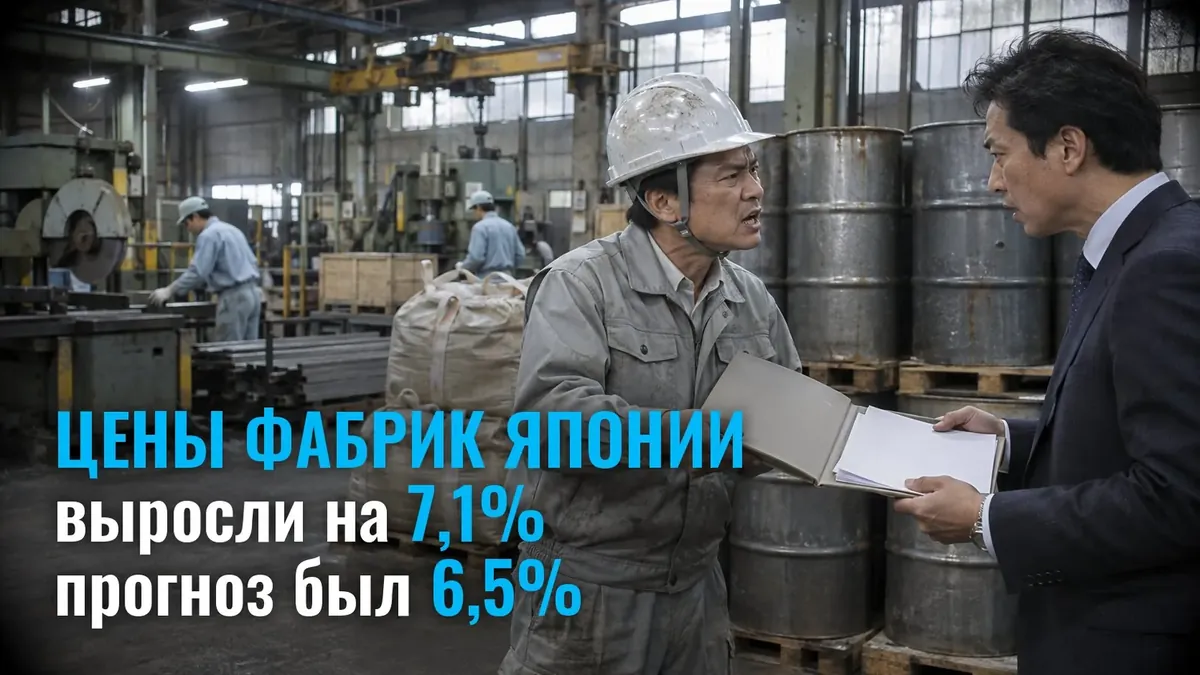
Japanese producer prices rose 7.1% year-on-year in October. Economists had expected 6.5%. After such data, the market is seriously pricing in a Bank of Japan rate hike at the December 17-18 meeting.
PPI is the producer price index, that is, prices in transactions between companies, before the shelf. A December move would be the third rate hike in a calendar year. Japan has not seen that since 1989.
For traders, this matters through the yen. The cheap yen was borrowed for years to buy assets abroad, so a reversal in Japanese rates hits both stocks and crypto.
What did the numbers show?
- 7.1% - growth in producer selling prices versus a 6.5% consensus
- 24.8% - growth in import prices in yen
- 1.25% - the Bank of Japan rate today
A weak currency makes fuel and raw materials more expensive. Factories pass part of these costs on to customers.
Why is a December move expected?
The rate has already been raised twice this year: in June and September. The December 17-18 meeting can be marked in the economic calendar.
- Reuters poll. In October, 54 of 78 economists named December as the month for a hike.
- Debate inside the regulator. Some officials are asking for caution due to weak domestic demand.
- A short path from zero. Japan only abolished negative rates in March 2024.
What risk does this pose to risky assets?
The first channel is the carry trade. This is a scheme where you borrow cheap yen and buy higher-yielding assets abroad: US stocks, crypto.
A rise in the Japanese rate makes such borrowing more expensive. A sharp strengthening of the yen forces positions to be closed and what was bought to be sold. In August 2024, the unwinding of these trades amplified a sell-off worldwide.
- $1.07 trillion - roughly how much in US government bonds Japan held in August
- Money coming home. If domestic yields rise, part of the funds will return to Japan, and US bond yields will head higher
What next?
- around 160 per dollar - the yen remains weak for now
- 11% - how much the Nikkei lost over the month
A single December hike does not guarantee mass selling: the market has been expecting it for several weeks. To trade indices, you can pick a challenge in advance.
The main point: what is more dangerous for risky assets is not December, but a series of sharp hikes in 2027.
Remember August 2024?
When the yen reversed last time, everything crumbled within a couple of days: indices, crypto, metals. Such days are what make a year's result. But on a deposit of fifteen hundred dollars, a perfect entry yields a hundred dollars of profit. Prop trading addresses exactly the question of nominal size: the company issues its account after a paid selection, and the trader keeps an agreed share. There is a month until the Bank of Japan meeting - enough time to figure out the scheme.