

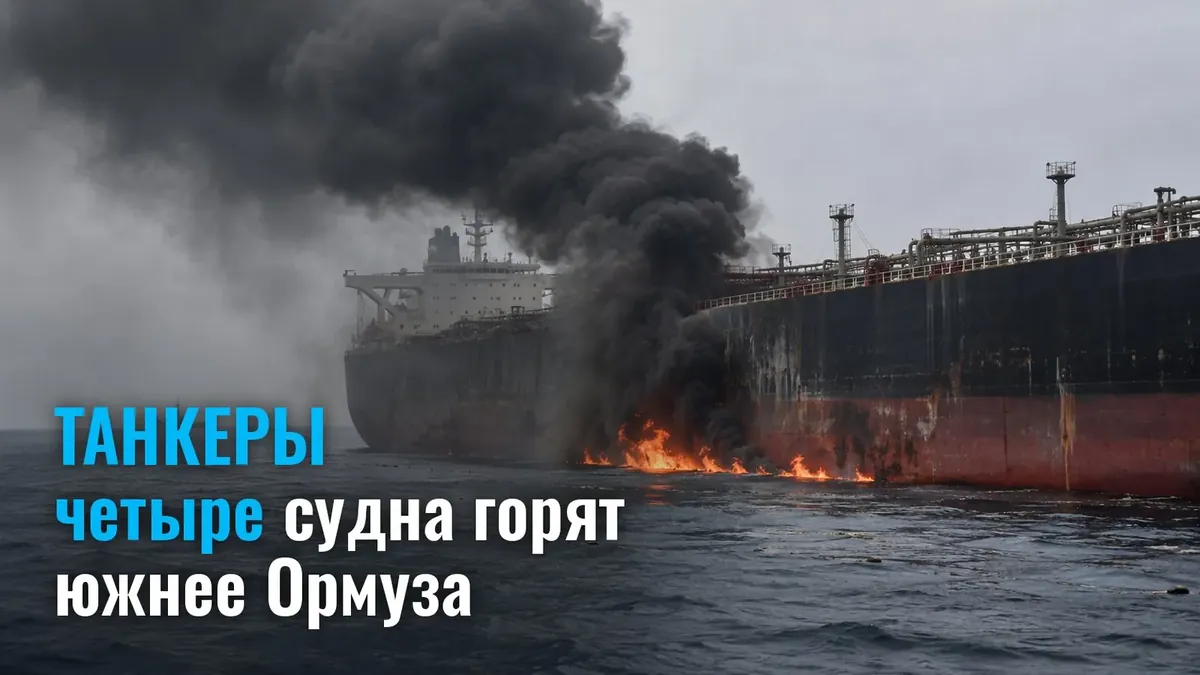
IRGC stated on November 4 that four oil tankers were destroyed after hitting sea mines. The vessels were traveling along a route that Iran calls prohibited. Two more vessels, according to the same account, were detained.
IRGC is the Islamic Revolutionary Guard Corps, Iran's elite armed forces. A sea mine is a charge in the water that detonates on contact with a vessel's hull.
The location is the area south of the Strait of Hormuz, the main maritime corridor for oil from the Persian Gulf. For a trader, this is a direct oil risk: vessel routes and insurance are recalculated immediately.
What exactly did Iran state?
- Four tankers. Destroyed after hitting mines south of the Strait of Hormuz.
- Two vessels detained. According to the same IRGC account, there is no other data.
- Fire. At the time of the statement, all four vessels continued to burn - meaning the incident is fresh, not an old story.
- Source. The incident was reported by Reuters, and the FXStreet feed came out at 07:32 MSK.
Why is this area critical?
The Strait of Hormuz is the narrow outlet from the Persian Gulf into the open sea.
- Oil from five countries. Crude from Saudi Arabia, Iraq, Kuwait, the UAE and Iran itself passes through the strait.
- Mines change logistics. Shipowners and insurers are recalculating routes and rates.
- Not just charts. Recalculation is happening among carriers and insurers, not only traders.
Why didn't oil rise?
The reaction turned out to be the opposite of what was expected. At the time of publication, WTI was trading at $94.55, which is down 1.30% for the day.
WTI is the US crude grade and the main oil futures contract.
Key point: the data comes from one side only. Neither the loss of the vessels nor the detention of the other two has been independently confirmed - neither by the owners nor by the militaries of other countries.
The reason for the decline is simple: the geopolitical premium was already priced in earlier, and the statement itself did not strengthen it.
What next?
- Confirmation. The market is waiting for word from shipowners and insurers on the fate of the tankers.
- Shipping. Attention is on statements regarding vessel passage in the strait area.
- Price. The key question is whether WTI will hold below $95.
Oil is not on the instrument list of every prop firm. See the terms and limits for energy in the prop firm catalog; you can put together an account for your market via the calculator.
Did oil move while you were asleep?
Headlines like this arrive at night, and you log into the terminal in the morning after the fact. And here what decides is the account's rulebook, not an analysis of the situation. Oil is far from being on the instrument list of every prop firm, and leverage on energy is often cut by a separate clause. Add to that the main thing: the daily drawdown at many firms is calculated by the worst point within the day - and the morning gap eats the limit before you even enter. These lines are worth reading in a calm market, while it's quiet at Hormuz.