

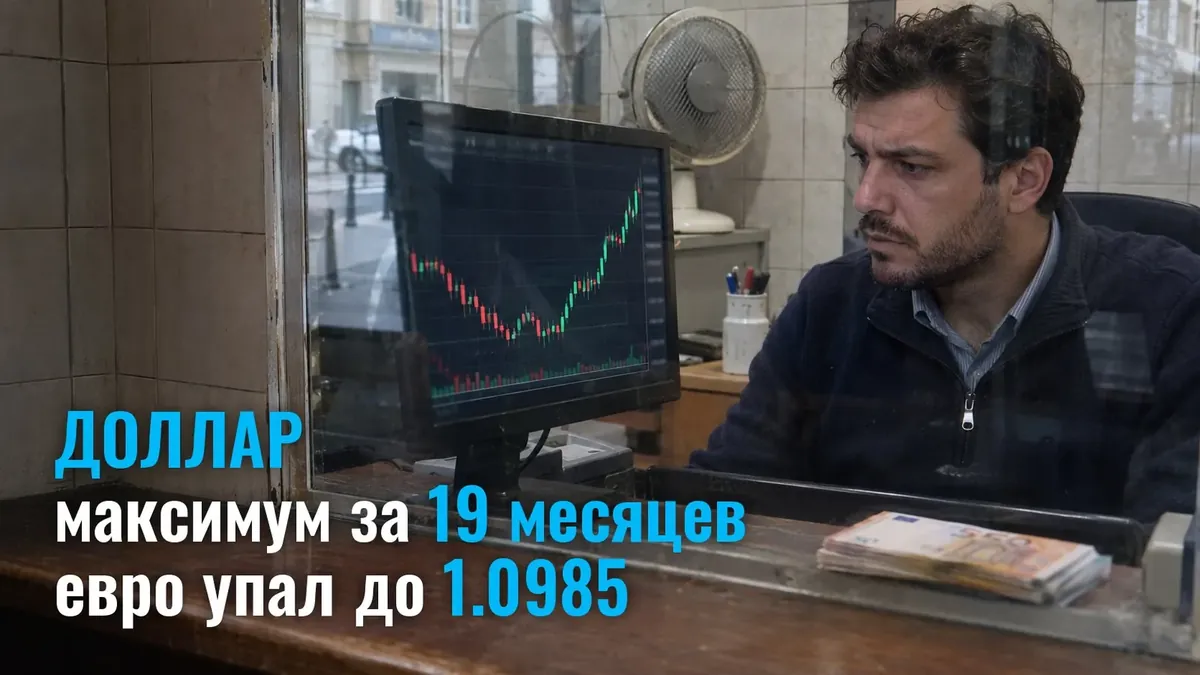
The dollar rose to a 19-month high on November 17, while the euro fell against it. During the European session, the EUR/USD pair broke through 1.1000 and reached its lowest level since April 2025. The DXY dollar index on the same day reached 103.70, also a 19-month high.
EUR/USD is the price of the euro in dollars. DXY shows the dollar's exchange rate against a basket of major currencies. Along with the euro, the yen, the Australian dollar and gold also fell under the dollar.
Where is the pair trading?
Bounce from the low. After touching 1.0985, the pair recovered part of its decline and traded near 1.1003.
- 1.1136: the 20-day moving average, the pair is trading below it.
- 31.8: the RSI value, right at the edge of the oversold zone.
RSI is an indicator on a scale from 0 to 100 that shows how heavily an asset has been sold off.
Why is the dollar rising?
Three things are pulling the dollar up.
- US inflation: last week it came in above expectations. The market now fully prices in a 25 basis point Fed rate hike in December, which is 0.25 percentage points.
- Demand for a safe haven: the Nasdaq lost 2.5% on Monday after a new US Commerce Department rule on exports of artificial intelligence chips. The sell-off spread from tech to other markets.
- Iran and the Strait of Hormuz: negotiations on the US and Israel war with Iran and the opening of the strait are at a standstill.
What fell along with the euro?
- 156.50: USD/JPY is trading around this level.
- 0.6750: AUD/USD fell below this mark, a ten-month low.
- $3,900: gold dropped below this, the lowest level since October 2025.
It is convenient to check the conditions for which pairs and indices to take in the challenge calculator.
Key point: the dollar moves this entire list at once, so positions in the euro, yen, Australian dollar and gold move in the same direction.
What to expect next for the dollar?
DXY has slowed down. By mid-European session on Tuesday, the index had fallen by less than 0.10% and interrupted a five-day winning streak.
The nearest support is 103.45, where the 50-hour moving average also runs. Deeper lies 102.75, while on the upside the move runs into 103.79.
- 13:00 MSK: Germany's ZEW business climate index, consensus 29.0 versus 28.1 in October.
- 16:30 MSK: US retail sales for October, forecast +0.1% versus September and +0.3% excluding autos and fuel.
- 16:30 MSK: US industrial production, forecast +0.1%.
- November 20: minutes of the October Fed meeting, published on Friday.
The release times of these reports are in the economic calendar.
Did you calculate this streak on your own deposit?
You watched the dollar rise for the fifth session in a row and figured out what that turned into on your balance. Everyone sees the same move on the chart, but the amounts come out different. The difference comes from the position's notional size. In prop trading, that notional size is bought through selection: you pay for the evaluation, trade within the company's risk limits and take an agreed share of the profit. It is calmer to understand how the scheme works from the inside before the Fed minutes on November 20.