

Figures
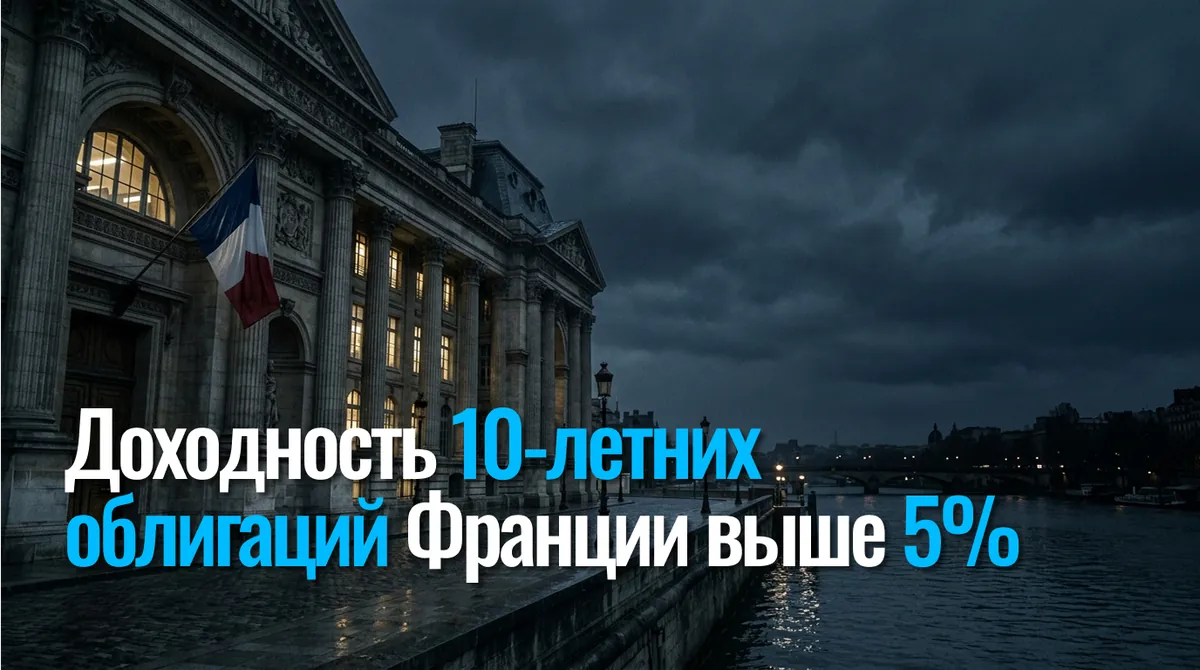
France's public debt in Q2 2026 stood at €3.596 trillion - that's 119% of GDP, a record since the post-war period. The yield on 10-year bonds has moved above 5%, something that hasn't happened in 24 years.
Why
The government lacks a parliamentary majority to pass a serious austerity plan. Marine Le Pen's right-wing party and Jean-Luc Mélenchon's left-wing forces have no intention of supporting spending cuts - both sides are capitalizing on the government's unpopularity ahead of next year's elections. Student protests are running in the background: last weekend they escalated into riots, and a partial curfew was imposed in several cities during the week. Emmanuel Macron said on Wednesday that he is holding a meeting with the security services, with new demonstrations expected on Saturday.
Market reaction
Outwardly calm: the French CAC 40 index is up 0.3%, EUR/USD is only slightly lower and holding around 1.1215, above the 1.1200 level. But the spread (the yield differential, that very risk premium) says otherwise: investors are demanding ever more for French debt versus German. According to Scotiabank, it is precisely the tension in spreads that is preventing the euro from continuing its recovery against the dollar.
What's next
The key marker is Italy: its spread to Germany has widened to almost 119 bps and is approaching the month's highs around 120-125. If it moves up together with the French one, the story will stop being just a French story and become a story for the entire eurozone - with pressure on European equities, the euro and the ECB's rate plans.
Held the euro while spreads diverged?
The debt story is a slow one: it drags on for weeks and hits the euro in a single day when the spread breaks a level. There are many ways to trade this, and here's where the surprises begin: some prop programs will happily let you hold a position through weekends and political headlines, while others close your account for carrying a position overnight from Friday to Monday. Drawdown limits on currency pairs also vary everywhere. Check this against how you actually trade, before Saturday's events have even begun.