

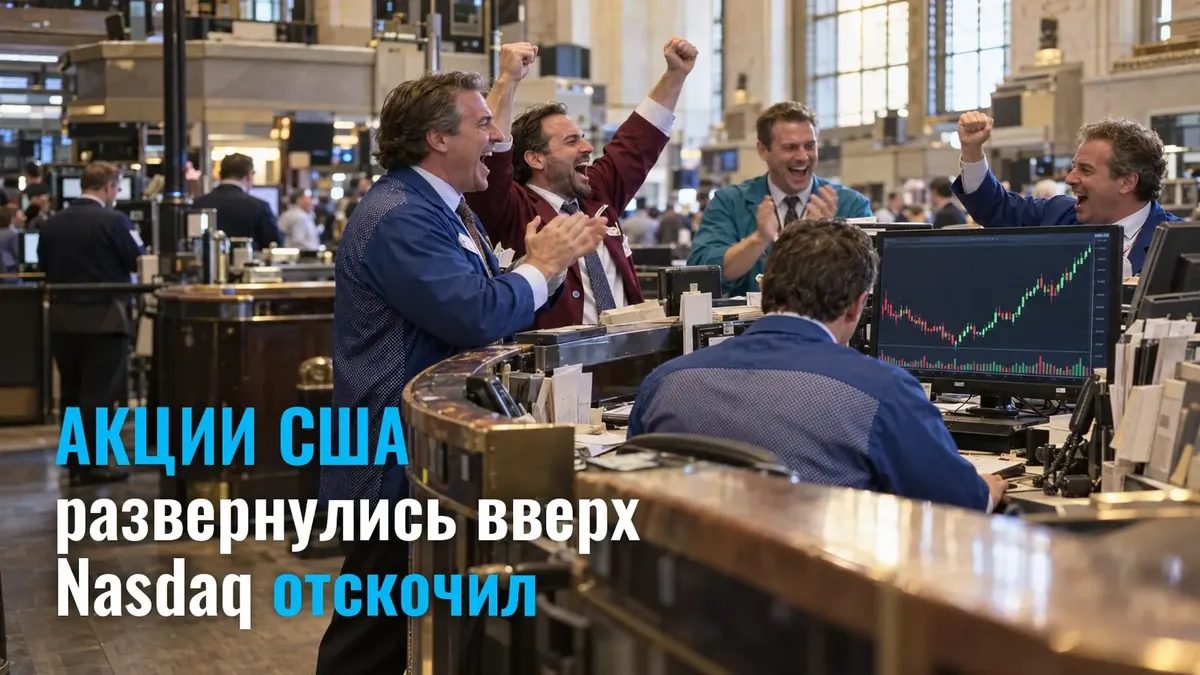
On November 2, US stocks sharply reversed upward, and the Nasdaq rebounded after recent sell-offs. There are two reasons: the market is expecting a peace deal on Iran and heard statements from the White House's chief economic adviser about the absence of a crisis in the artificial intelligence sector.
Who spoke. Kevin Hassett is Donald Trump's chief economic adviser. This is a White House position, and the market reads his words as a signal of the administration's stance.
Why this matters to a trader. The move affected the entire risk market, not just one stock. But it rests on expectations and comments, not on data.
How strong was the rebound?
By evening Moscow time, the rebound in US stocks was being described as one of the sharpest in recent sessions.
- The move was broad - risk was bought across the board, not in a single stock
- The main previous casualty - artificial intelligence-related stocks
- The basis for the rally - expectations and an official's words, not released data
What turned the market around?
- Geopolitics. The market is pricing in a peace deal on Iran. For stocks, this removes part of the risk premium: less threat to energy supplies and less uncertainty for the entire risk portion of the portfolio.
- Hassett's words. Kevin Hassett publicly stated that there is no crisis in the AI sector and no risk of continued sell-offs. It was precisely around AI stocks that the main wave of decline had occurred before this, so the statement landed exactly on the sore spot.
What do elections have to do with it?
The calendar matters. All of this is happening ahead of the US midterm elections. During such a period, the administration's rhetoric is deliberately positive.
Key point: verbal support is not reporting and not a rate decision. It holds the market up only until the next data point. It is convenient to keep publication dates in the economic calendar.
What could break the rally?
A base made of expectations makes the move fast but fragile. A reversal downward could be just as sharp as the rise.
- A denial on Iran - the risk premium will return to prices
- A weak report from the technology sector - will hit the same AI stocks
If you trade indices, you can look at the conditions for this style in the challenge calculator.
Did you buy this rebound or watch from the sidelines?
Familiar: in the morning the market is red, by evening it's soaring on a single official's comment. You're either already in, or you spent the whole day waiting for confirmation. Such reversals are worked off with position size, not with entry precision: on a deposit of a couple thousand, an index move of one to one and a half percent is dinner. Prop trading is structured as access to the company's trading account: a paid selection process, then trading its money for a share of the profit. It's better to study the mechanics in a calm market, not in the middle of the next evening like this.