
Notes
7 sections · 1926 words1What a prop firm is and how it works
To get such an account, a trader first passes an evaluation called a Challenge. During it, the trader must reach a set profit target while following the company's rules and risk limits. After passing successfully, the trader receives a Funded Account and the opportunity to earn a share of the profit generated.
- •trade systematically
- •control risk
- •follow the prop firm's rules
- •work within the permitted drawdown
- •stay disciplined over the long run
The main idea of Prop Trading is that a trader gets the opportunity to work with a larger account without needing comparable capital of their own. In return, they accept the rules of a specific Prop Firm. What a prop trader's path looks like
In most cases, the path can be divided into three main stages:
1Challenge
The trader chooses a Prop Firm and buys a Challenge of a certain size. For example:
$10K / $25K / $50K / $100K / $200K
During the Challenge, you need to reach the profit target without breaking the company's limits. The main parameters a trader will encounter:
We will cover all of these concepts in detail in the next lesson.
2Funded Account
After successfully passing the Challenge, the trader receives a Funded Account. This is the next stage of working with a Prop Firm, where the trader continues to trade under the set rules and can receive payouts for positive results. At this stage the goal changes. Before Funded, the task was:
Pass the Challenge. After Funded:
Keep the account and deliver consistent results. Getting a Funded Account is not enough. What matters is learning to hold on to it over the long run.
3Payout
The size of this share is determined by the Profit Split parameter. For example:
If the Profit Split is 80/20, the trader receives 80% of the reward due to them, and 20% stays with the company under the program terms. If the trader delivers results and follows the rules, they can request payouts according to the terms of the chosen Prop Firm. So the basic path looks very simple:
CHALLENGE → FUNDED ACCOUNT → PAYOUT
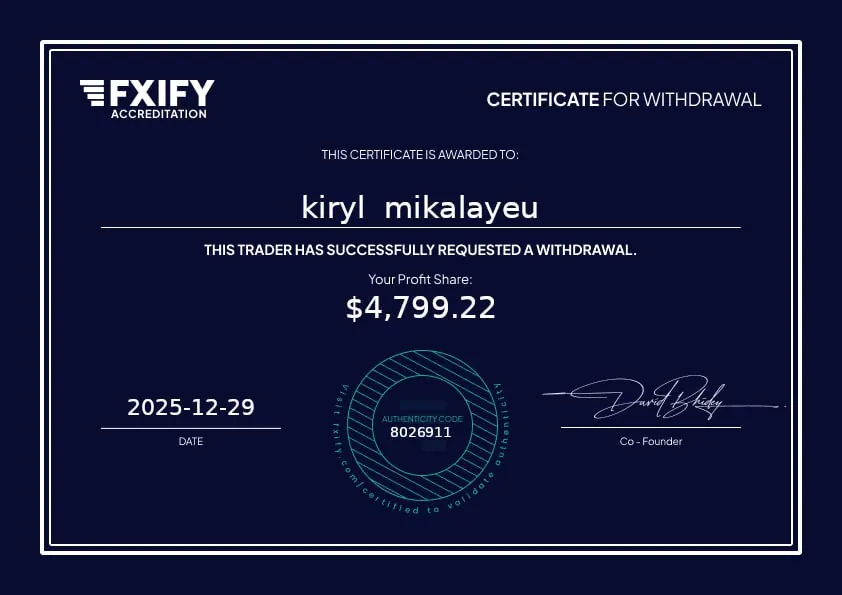
An example of a real confirmed payout by a PropMarketCap user:
21-Step vs 2-Step Challenge: what's the difference
Challenges can have a different number of stages. Two common options:
It is important to understand:
The number of stages alone does not make a Challenge better or worse. You need to look at the full set of conditions.
1-Step Challenge
How it works
For example:
Starting balance: $100,000
Profit Target: 10%
The trader needs to reach the profit target while following all risk limits at the same time. After passing the stage, they move on according to the program rules. Key features
- •one stage
- •a shorter path to a Funded Account
- •one main profit target
- •risk conditions may differ from two-step programs
- •additional restrictions need to be studied carefully
What to check
- •Profit Target
- •Daily Drawdown
- •Maximum Drawdown
- •drawdown type
- •Consistency Rule, if there is one
- •Challenge price
- •rules after receiving a Funded Account
2-Step Challenge
For example:
Funded Account
After passing the first stage, the trader moves on to the second. Only after meeting the conditions of both stages do they receive the next status under the program rules. Key features
- •two stages must be passed
- •each stage may have its own profit target
- •the requirements of the first and second stages may differ
- •the path to a Funded Account consists of two parts
- •the rules of both stages must be taken into account
What to check
- •Profit Target of the first stage
- •Profit Target of the second stage
- •Daily Drawdown
- •Maximum Drawdown
- •drawdown type
- •additional restrictions
- •Challenge price
- •Funded Account rules
Which to choose: 1-Step or 2-Step? There is no universal answer. You can't say:
1-Step is always better because it is faster. And you can't say:
2-Step is always easier because there are more stages. When choosing, you need to consider:
your trading strategy + acceptable risk + trading style + the specific Challenge conditions. In the following lessons we will look at how to compare such programs properly. Practical part
On PropMarketCap you can look at two real Challenges:
1-Step vs 2-Step
and compare:
- •profit targets
- •permitted drawdown
- •price
- •additional rules
- •Funded Account conditions
This way the user immediately sees that the number of stages is just one of the parameters.
3Prop Trading vs trading your own money
You can trade either your own capital or through a Prop Firm. These are two different models, each with its own advantages, limitations and risks. Trading your own money
The trader uses their own capital. They decide for themselves:
- •account size
- •acceptable risk
- •trading strategy
- •the rules of their trading
The entire financial result belongs to the trader. But the entire risk to their own capital also lies with them. Prop Trading
In Prop Trading, the trader works within a Prop Firm program. They must follow:
- •drawdown limits
- •the rules of the specific Challenge
- •trading restrictions
- •Funded Account conditions
In return, the trader gets the opportunity to work with a larger account without having to put up a comparable amount of their own capital. Comparison
Which is better? There is no universally better option. Trading your own money gives more freedom, but the trader bears full responsibility for the risk to their own capital. Prop Trading makes it possible to work with a larger account, but requires following the company's rules and restrictions. So the right question is not:
“Which is better?”
“Which model suits my strategy, capital and attitude to risk?”
4Common beginner mistakes and expectations
A person sees the target:
+8%
+10%
and starts thinking:
“How can I do this as fast as possible?”
But the right approach is different:
“How can I pass the Challenge without breaking my trading system and the Prop Firm's rules?”
Let's go through the main mistakes. Mistake #1. Trading without a plan
The trader opens trades “by feel” and doesn't define in advance:
- •where they enter
- •where they exit
- •where they take a loss
- •what size they risk
Consequence
It is impossible to control risk systematically and understand why trading produces a given result. Solution
Create a trading plan and stick to it. Mistake #2. Trying to pass the Challenge as fast as possible
After a few winning trades, the trader starts increasing risk to reach the Profit Target faster. For example:
They usually risk 0.5% per trade. 2% remains to the target. The trader raises risk to 2–3% to close the target with one trade. Consequence
A few losing trades can quickly wipe out previously earned profit or lead to a Drawdown violation. Solution
Mistake #3. Misunderstanding the real risk
One of the most important mistakes in Prop Trading. The trader sees:
$100K ACCOUNT
and perceives it as $100,000 of available risk. But that's not the case. For example:
Account size: $100,000
Maximum Drawdown: 10%
With a simple static model, the room to maximum drawdown is:
$10,000
not $100,000.
That's why in Prop Trading it is important to look not only at the account size, but also at:
- •Daily Drawdown
- •Maximum Drawdown
- •drawdown type
- •your own risk per trade
A separate module of the full Academy will be dedicated to risk management specifically for Prop Trading. Mistake #4. Ignoring the Prop Firm's rules
You can be a profitable trader and still lose the account because of a rule violation. For example:
- •exceeding the Daily Drawdown
- •breaking the Consistency Rule
- •prohibited news trading
- •using a prohibited strategy
- •breaking Copy Trading rules
- •breaking other program restrictions
Solution
Study the rules before buying a Challenge, not after a violation. That is exactly what the next Academy lesson is about. Mistake #5. Emotional trading
Prop Trading creates additional psychological pressure. After a loss, the trader may try to win the money back quickly.
This leads to:
Solution
Define in advance:
- •maximum risk
- •maximum daily loss
- •number of trades
- •conditions for stopping trading
A separate Academy module will be dedicated to Prop Trader psychology. Mistake #6. No statistics
If a trader doesn't keep trading statistics, it is hard for them to understand whether their system suits a particular Challenge. For example, they may not know:
Without this information it is impossible to assess risk properly. Solution
Keep a trading journal and analyze your own statistics. Realistic expectations
It is important to have the right attitude to Prop Trading even before buying your first Challenge.
Key takeaway of the lesson
It is a system in which the trader needs to simultaneously:
- •deliver results;
- •control risk;
- •follow the rules;
- •stay disciplined.
And the path doesn't end with passing the Challenge. It looks like this:
CHALLENGE → FUNDED → PAYOUT → CONSISTENT RESULTS