

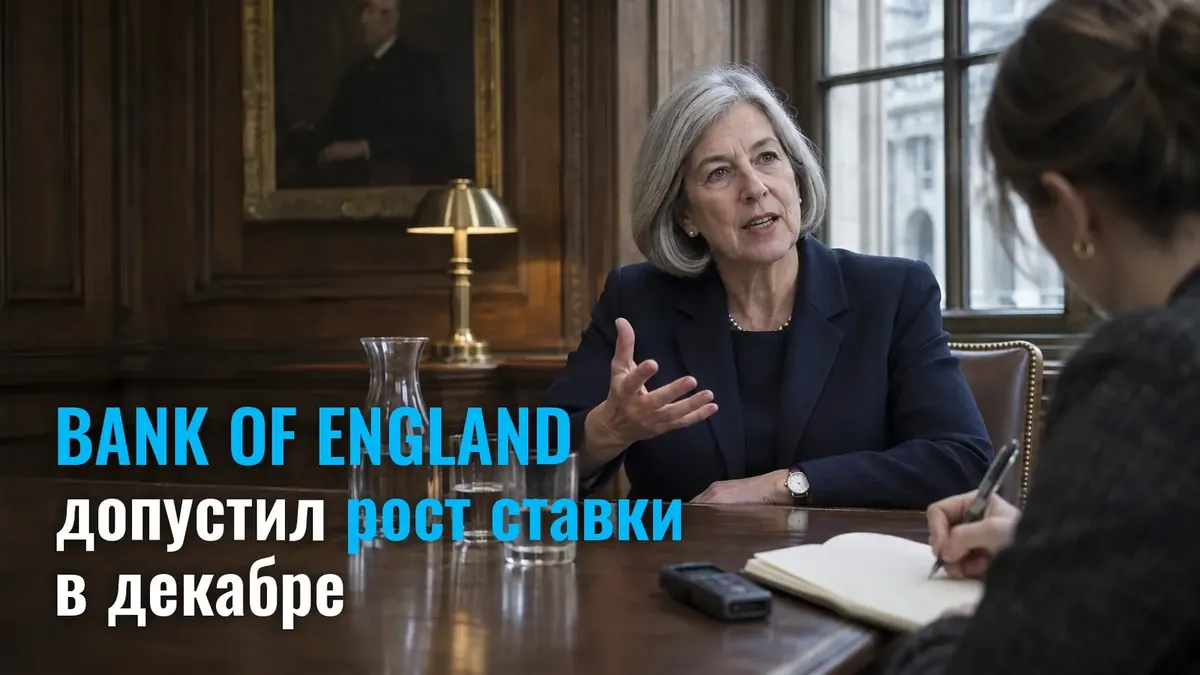
Claire Lombardelli, Deputy Governor of the Bank of England, did not rule out a rate hike in December. She said this in an interview with the Guardian.
The Bank of England is the UK's central bank; it sets the key rate for the pound. The market is used to expecting cuts from it, so this tone sounded like a reversal. The tone of officials' statements is what traders use to guess the future rate decision.
For a trader, this means the pound is once again trading on expectations of a hike rather than a cut.
What exactly did Lombardelli say?
The door to a hike is open, but the decision is not predetermined. Verbatim, she added: "equally, I don't have enough information yet."
- "Economy in low gear" - that is how she described the British economy.
- Young people are suffering the most - hiring in the country has fallen noticeably.
- No mass layoffs - the labor market is cooling without a wave of dismissals.
How did the pound react?
The market barely reacted to the words themselves. GBP/USD traded around 1.3452, slightly above flat.
- 6 out of 10 - the rating of the speech on FXStreet's rhetoric hawkishness scale.
- 7.2 - the historical average for this scale.
The tone came out softer than usual. But the open door to a December hike prevents reading it as fully dovish. A dovish tone is a hint at a rate cut and loose policy.
Why is the pound rising against the yen?
The pound is moving much more noticeably against the yen. GBP/JPY is rising for the second session in a row and by mid-European session on Tuesday reached the 212.50 area.
The week's result for the pound:
- +0.76% - against the dollar.
- +0.53% - against the yen.
- +0.70% - against the franc.
- -0.15% - a loss to the euro.
- -0.60% - a loss to the New Zealand dollar.
The pair is rising on the difference in tone between the two central banks.
- Weak demand in Japan. Household spending in September fell 6.8% year on year - the tenth consecutive month of decline and the worst result since September 2020.
- Rate plans in question. Such data complicate the Bank of Japan's further rate hikes.
- Dispute within the bank. In the minutes of the October meeting, some officials spoke in favor of accelerating hikes: core inflation in the country has reached the 2% target.
What's next?
- Wednesday - the preliminary estimate of UK GDP for the third quarter, the nearest reference point for the pound. It's convenient to keep the date in the economic calendar.
- Risk of yen interventions - talk that authorities will step in to support the currency has not left the market.
Key point: the pound is currently being driven by officials' words and data, not by a smooth trend. Before such days, it's worth checking what your program's rules allow - the conditions are collected in the challenge catalog.
Were you holding the pound when the headline hit?
Such phrases from officials drop without a schedule; you can't prepare for them in advance. Either you're already in GBP/JPY, or you're watching the candle from the sidelines. The rest is decided by your program's rules: some allow entry on the headline release and reaction to a central bank speech under an explicit clause, while others close your account for it, and on top of that there's a daily drawdown limit. This is visible in the terms before you pay for the challenge. Before Wednesday with UK GDP, it's logical to check.