

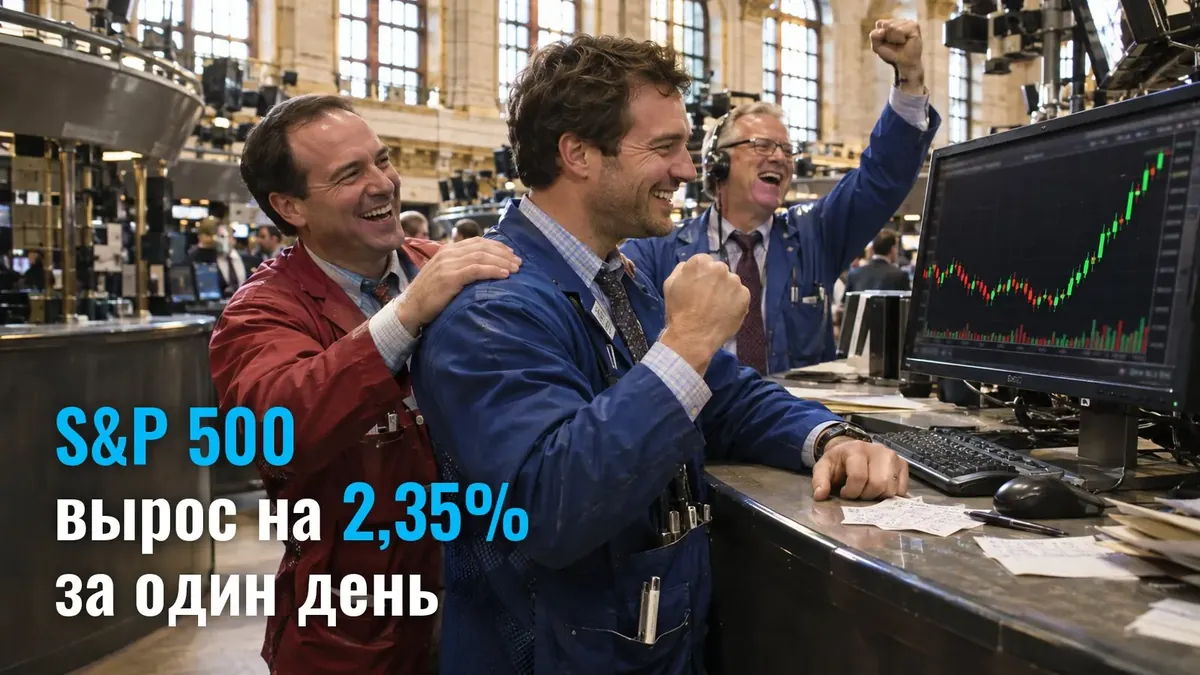
US stocks have recovered almost the entire post-midterm-election selloff. The S&P 500 rose 2.35% for the day, its best result since April. The Nasdaq gained 5% over two sessions.
The S&P 500 is an index of the 500 largest US companies. The Nasdaq is an index weighted toward technology stocks. The congressional elections took place on November 4, and the market initially reacted to them with a selloff.
For traders, the market regime itself has changed: the VIX volatility index plunged by 5.72 points. The VIX shows the expected range of S&P 500 fluctuations over the next month.
How deep was the selloff?
The drop and the recovery took several sessions. After the elections the index fell, then almost fully rebounded and returned to levels seen before November 4.
- 4.4% - how much the S&P 500 fell after the elections
- about 3% - the rebound that brought the index back to its previous levels
- 0.25% - the decline over four trading days since the elections
What pulled the market up?
- Chips. The Philadelphia Semiconductor Index gained more than 11%. This is an index of semiconductor manufacturers' stocks.
- The artificial intelligence theme. Shares of AI-related companies rose.
- Positioning. Before that, large players held such stocks at a lower weight than their benchmark indices prescribe, and a reversal of such positioning amplifies the move.
Volatility contracted following the rally. The 5.72-point drop in the VIX was the strongest one-day decline since April 2025. Back then, the market was rebounding after a tariff-driven selloff.
What do strategists say?
Jim Reid, strategist at Deutsche Bank: "Markets have put in a very strong performance over the last 24 hours," investors have become "much more optimistic about the near-term outlook."
RaboResearch takes a more cautious view. This is the research arm of Rabobank. There they point to the issues that the rally has not resolved:
- the buildout of artificial intelligence infrastructure in the US - the risks around it remain
- industry - closing the gap with China is getting harder
- investor reaction - while stocks are rising, these issues are being deferred
What's next?
Two things are worth watching. Whether demand for AI-related stocks holds up and whether the VIX stays at a low level.
- event calendar - see upcoming data and meetings in the economic calendar
- choosing an instrument - for trading indices you can pick a challenge by style and market
You saw the rebound, but how much did it bring you?
A 2.35% day on the index is visible to the naked eye. Everything is decided by position size. In an account of a couple thousand dollars, such a rebound turns into dinner: no matter how precise the entry, the ceiling doesn't move. A prop firm works differently: a paid evaluation, access to its trading account, strict loss limits and the company's share of the earnings. It's calmer to study the mechanics before the next day, when indices move 2%.