

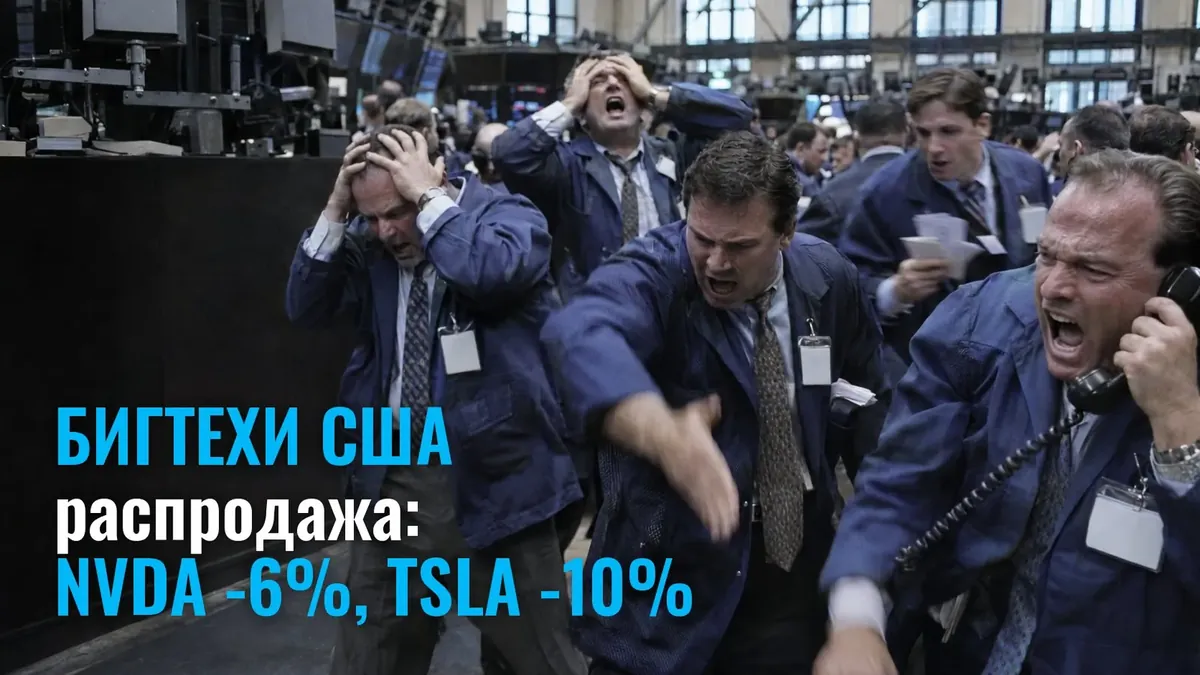
Major US tech stocks fell in unison at the open of the American session on November 5. Nvidia is losing about 6% and heading toward an 8-month low. Tesla is dropping roughly 10%.
It's not just one stock falling — it's the sector. The S&P 500 index is declining along with the stocks. S&P 500 - a broad index of the 500 largest US companies.
This directly affects traders. Days like this change the behavior of indices and futures within the session.
What do the numbers show?
The picture for the stocks as of 17:48-17:58 MSK:
- NVDA - about -6%, the lowest level since March. Nvidia is the largest manufacturer of artificial intelligence chips.
- TSLA (Tesla) - about -10%
- SPCX - about -8%
The index is down too. The S&P 500 is declining: the sell-off is happening not in a single stock but across the entire tech sector at once.
What does this mean for a trader?
This is a risk-off move across an entire block. When the opening drawdown hits Nvidia, Tesla, and the index alike, it's not about a corporate story of one company.
What changes in trading:
- Wider ranges. Intraday moves are larger than in a normal session.
- Levels are crossed more sharply. Price flies through marks faster than on a calm day.
- Index weight works against you. Heavy stocks drag the S&P 500 futures and Nasdaq along with them.
Key point: the synchronized decline of Nvidia, Tesla, and the index is a signal to look at position size, not at an individual story. Upcoming US market events are in the economic calendar.
What to keep in mind?
The reasons for the move are not disclosed in the reports. Data is as of the evening of November 5.
Percentages change during the session. The figures above are a snapshot at 17:48-17:58 MSK.
Did you watch this open from the sidelines?
A 6-10% move in stocks of this size happens a few times a year. On days like this you can see how cramped it is to sit in your own deposit: the range is huge, while your index position is one contract. You can get the notional for your idea from a prop firm. You pay for a test of discipline and loss limits, then trade its account for an agreed share of the result. The scheme is simple, but it has its own rules, and it's better to know them in advance.