

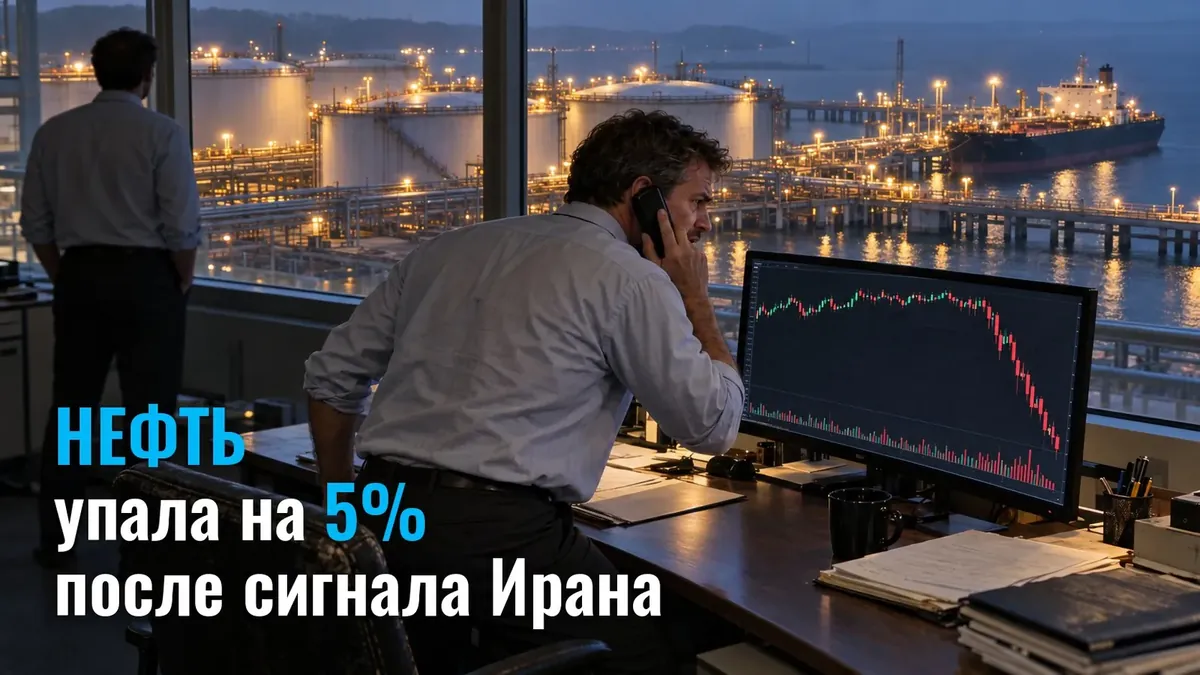
Oil fell by about 5% on the evening of November 2. The reason is a statement by Iranian President Pezeshkian. He said they intend to resolve the conflict with the US through dialogue.
Why words about Iran matter for the price. There is a geopolitical premium baked into oil. It is a surcharge for the risk of supply disruptions from the region.
For a trader, this is an example of a move without a schedule. The five percent came not from statistics, but from a single phrase.
How did it all unfold, minute by minute?
The timeline is short: five minutes passed between the two messages.
- 16:49 MSK. Words from Iranian President Pezeshkian about the war with the US appeared: "We will try to solve the problem through dialogue."
- 16:54 MSK. A clarification followed: Iran's supreme leader granted the government authority to conduct negotiations.
- Another version of the wording. According to it, the supreme leader ordered the conflict with the US to be settled through dialogue.
Why does this move oil?
The market trades not the deal, but the expectation of a deal. That is why the risk premium leaves the price even before any documents.
- Geopolitical premium - a surcharge in the price for the risk of supply disruptions from the region.
- A hint of de-escalation removes this surcharge, and removes it quickly.
- Selling happens on words, not on the fact of a deal.
What does this mean for a trader?
The source of the move. The 5% drop came not from statistics and not from a inventories report, but from a single phrase without a schedule.
The timing. No one expected economic data at that time: that hour was not in the economic calendar. That is why the statement hit the order book immediately and without preamble.
The main point: five percent in oil was delivered by a single phrase, not by a report or a statistic.
What happens next?
Next, everyone watches for confirmation. The question is whether the same thing will be said by the US side and whether real contours of negotiations will appear.
- Washington's reaction - whether they will repeat the thesis about dialogue.
- The contours of negotiations - whether anything concrete will appear instead of statements.
- The return of the premium - for now this is a statement, not an agreement, and the risk surcharge could return as sharply as it left.
If you want to trade moves like this not with your own money, it is worth choosing a challenge for your market in advance.
Caught these 5% in oil?
The most frustrating thing about days like this: everyone saw the move, but only a few made money from it. On a deposit of a couple thousand, a five-percent candle in oil yields a sum you would be too lazy to even withdraw. Prop trading solves exactly this problem: you pay for the evaluation, pass it, and trade the company's trading nominal while keeping a share of the profit. Geopolitics does not send out a schedule. It makes sense to understand the mechanics before the next such phrase from Tehran.