

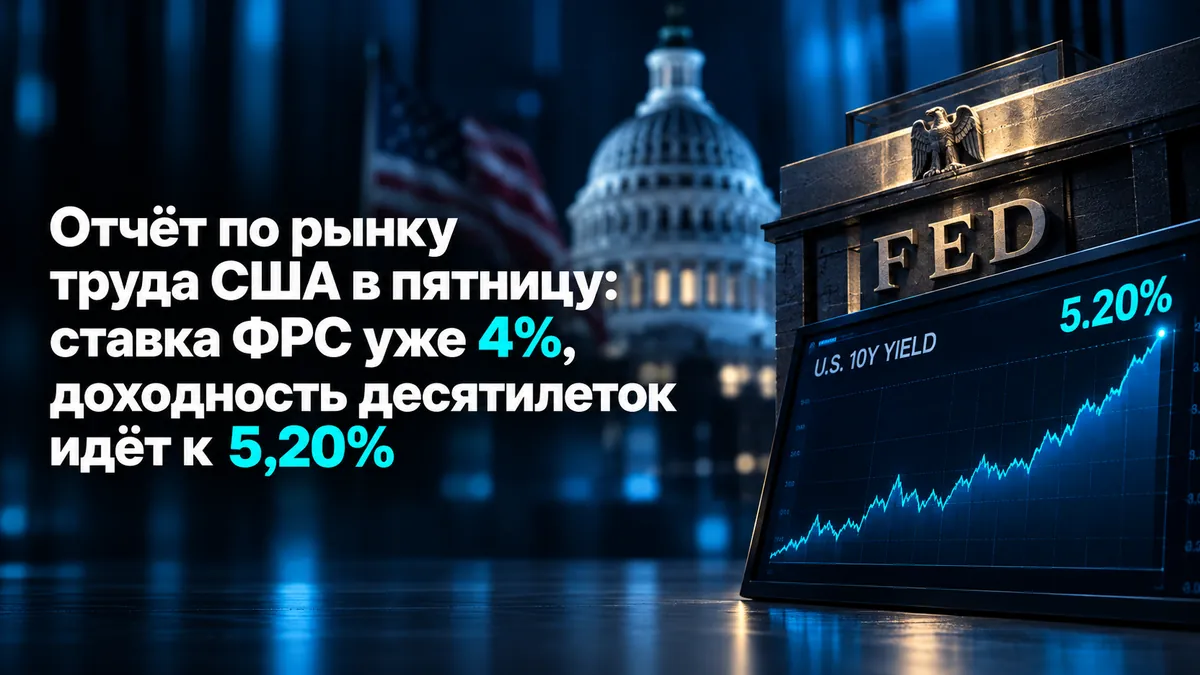
On Friday, October 2, at 15:30 MSK, the US employment report is released. This week it's the main macro event: the bond market has already repriced levels, and the Fed has raised rates for the first time in more than three years.
What's already on the table. The preliminary US composite business activity index for September jumped to 58.4 - the highest in more than five years. A value above 50 means economic growth. Inside the report, both main components are heated up: employment and prices.
The Fed raised the rate by 25 basis points, to 3.75-4.00% - this is the first hike in more than three years, and the regulator has made it clear that tightening may continue. The yield on ten-year US Treasuries has already broken through the psychological level of 5% and is approaching 5.20%; the article seriously discusses a path to 6%. Bond yields are the cost of money in the economy: the higher they are, the more expensive debt is for everyone.
Why employment is read in reverse. Usually a strong labor market is good news. Not now: solid hiring plus accelerating wages mean that domestic inflationary pressure isn't going away and the Fed can't stop. The classic pattern of "good data = bad for markets." You need to look not only at the number of new jobs, but also at unemployment and, most importantly, at wage dynamics.
Under scrutiny: US Treasury yields, the dollar, tech stocks (they are the most sensitive to rates), gold and oil. The backdrop is amplified by geopolitics, expensive oil and the closing of the month and quarter - this in itself adds sharp moves.
▫️ Scenario A: data is strong again - yields continue to rise, the dollar gets support, pressure on tech stocks intensifies.
▫️ Scenario B: the report is weaker - the question is whether the market will rejoice at falling yields or be frightened that expensive credit has reached the real economy.
The direction can't be guessed in advance. Something else is known in advance: at 15:30 MSK on Friday, liquidity is thin and moves are wide.
Are you planning to trade the Friday data?
Half an hour around the employment numbers is a separate kind of trading, and many live off exactly that. The problem is different: some prop programs directly prohibit such trades and close the account for a single position at the data release, while some, on the contrary, are made for them. You need to figure this out before buying a challenge, not after your account is disabled on Friday evening. The selection takes a minute and immediately filters out programs where your style is outside the rules.