

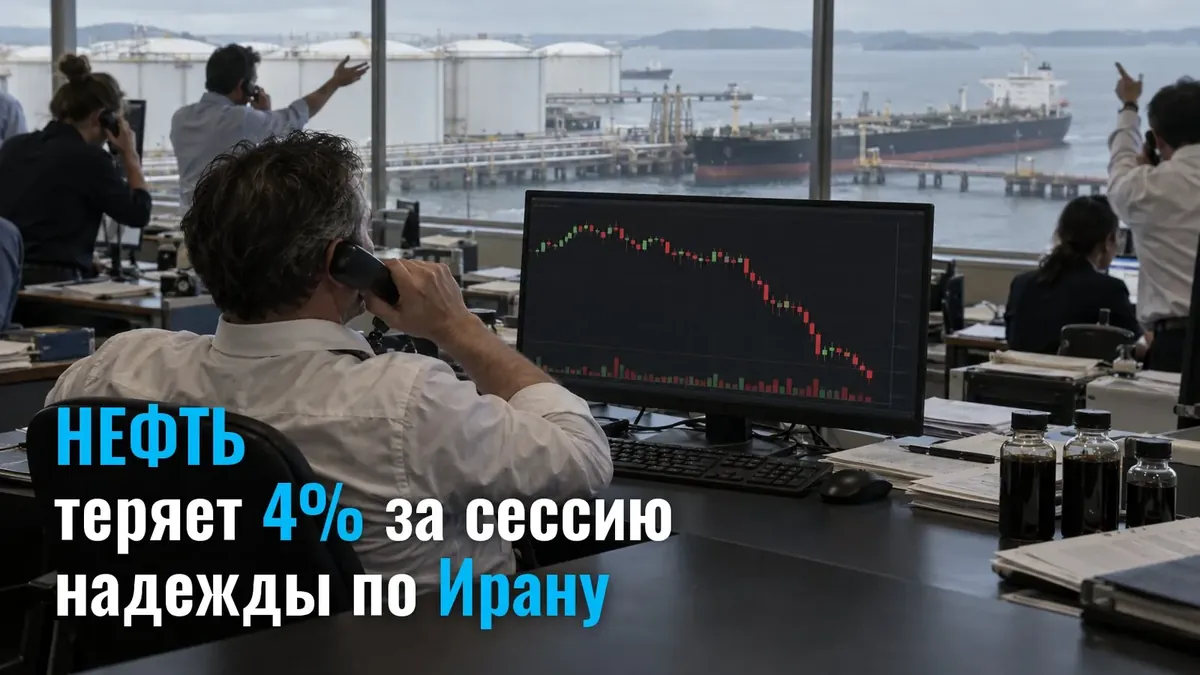
Oil fell by roughly 4% in a single session on November 2. There was no trigger in the fundamental data. The market was driven by media reports of hopes for a peace deal on Iran.
It comes down to the risk premium. The risk premium is a markup in the price of a barrel to cover the possibility of supply disruptions. As long as the threat around Iran looks real, traders pay more per barrel.
Why this matters to a trader. On days like this, oil moves not on statistics but on officials' wording. The move comes without warning and happens in a single pass.
Why did the price go down?
Geopolitics made the move. The market reads the reduction of risk around Iran unambiguously: fewer threats to supply means less risk premium in the price of a barrel.
- 4% - the approximate drop in oil over the session
- Inventories and production - irrelevant, there were no trigger numbers
- That very premium the market had been pricing in over recent weeks is coming out faster than it was built up
What added optimism?
Reports of disagreements within the US-Israeli track are adding to the backdrop for a shift in sentiment. According to media reports, the position of Israeli Prime Minister Benjamin Netanyahu is tougher than the White House line.
- Headlines instead of a document. There is no official agreement at the time of the move.
- The market trades expectation, not a signed text.
- The price is vulnerable. Any new remark reverses the move.
What does this mean for a trader?
The news headline is stronger than the chart. The technical picture on days like this is secondary to the news.
The main point: such moves come without warning, happen in a single pass and roll back just as quickly if negotiating optimism is not confirmed.
Events around which such spikes form are convenient to track in the economic calendar.
What happens next?
Next, watch for confirmation or denial of the negotiating track. Any official remark on Iran can bring the risk premium back into the price as sharply as it was taken out today.
- Statements on Iran - the main trigger for the coming sessions
- Netanyahu's rhetoric - a signal of how real the peace track is
- Absence of news - a reason for pullbacks without an obvious cause
To work such commodity moves, you can pick a challenge in advance.
Did you watch those 4% fly by?
You saw the move and understood the reason. And you still ended up where you were. With a couple of thousand on deposit, 4% on oil is not a result but a line in your trade history. It all comes down to position size, not the ability to read headlines. Prop trading works differently: you pass a company's paid evaluation and then trade its account under its risk limits, taking your share of the profit. It's worth understanding the mechanics before the next day like this.