

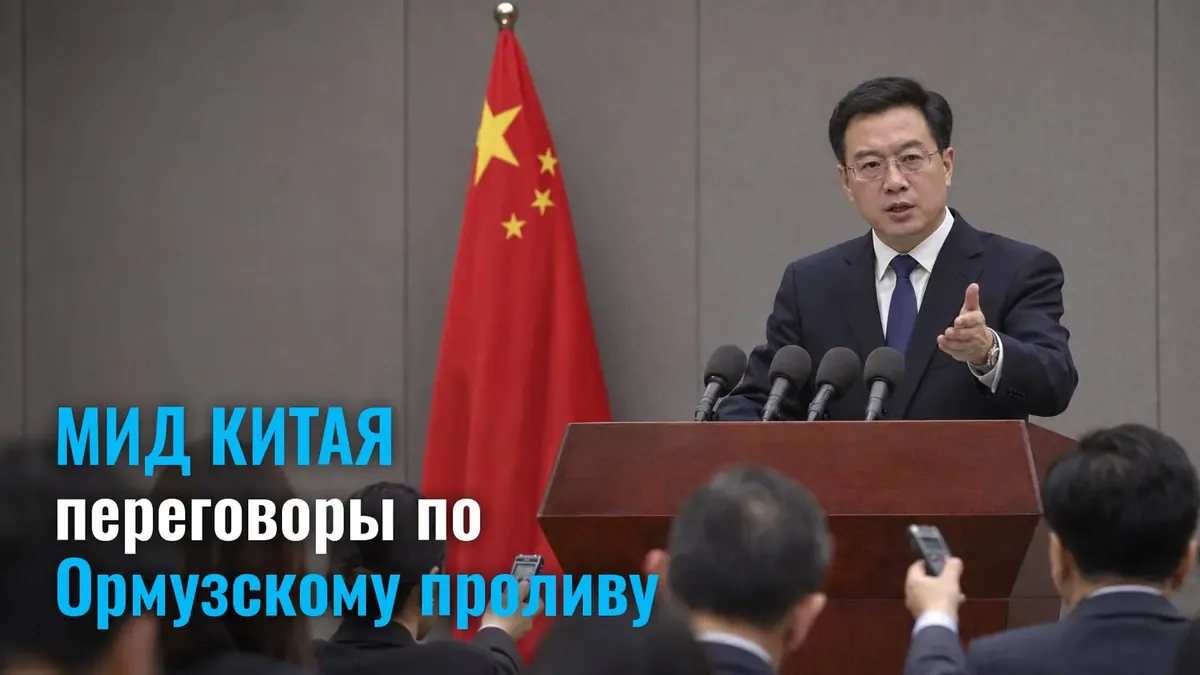
China's Foreign Ministry said Beijing is negotiating with Iran and Saudi Arabia on opening the Strait of Hormuz. The report came out on November 4.
The Strait of Hormuz is a narrow maritime outlet from the Persian Gulf. The region's largest producers export oil through it.
For a trader, this is a commodities story. Headlines of this type move oil immediately, without numbers or reports.
What exactly did Beijing say?
The statement hit the wires around 11:45 Moscow time. Two parties to the negotiations were named - Iran and Saudi Arabia.
What the report does not contain:
- the format of the negotiations - the Chinese ministry did not disclose it
- timelines - no dates were given
- the list of participants - who is at the table is unknown
The very wording "on opening" suggests that passage through the strait is currently restricted.
Why is China the mediator?
China is the world's largest oil importer. A significant portion of its supplies comes by sea from the Persian Gulf.
- Logistics. Any restriction in Hormuz hits Chinese logistics harder than anyone else's.
- Access to both sides. Beijing talks to both Tehran and Riyadh at the same time.
What does this mean for a trader?
For oil, this is the type of headline that moves the price without publishing numbers or reports. On such days, Brent and WTI react to officials' wording, not to inventory statistics.
Key point: at the time of the statement, there was no confirmation from the Iranian or Saudi side. In the public sphere there is so far only one version, from Beijing.
If you trade oil on news, check the terms in advance and choose a challenge suited to commodity instruments.
What's next?
Wait for the reaction of Tehran and Riyadh and any details on timelines.
- Confirmation from the parties - so far the negotiations are confirmed only by one side's words
- Timelines and format - any specifics will add movement
- The next statement on the topic - could reverse the movement
The nearest macro data on the market is in the economic calendar.
Is oil even on your list of instruments?
Headlines like this about Hormuz arrive without a schedule. The reaction in Brent appears before you manage to open the terminal. Then the specifics begin: some prop firms have oil on their instrument list, while others offer only currencies, metals and indices. Somewhere the leverage for commodities is separately reduced, and entry on geopolitical news is written into a separate clause of the rules. It is easier to check these lines in advance than after the first such morning.