

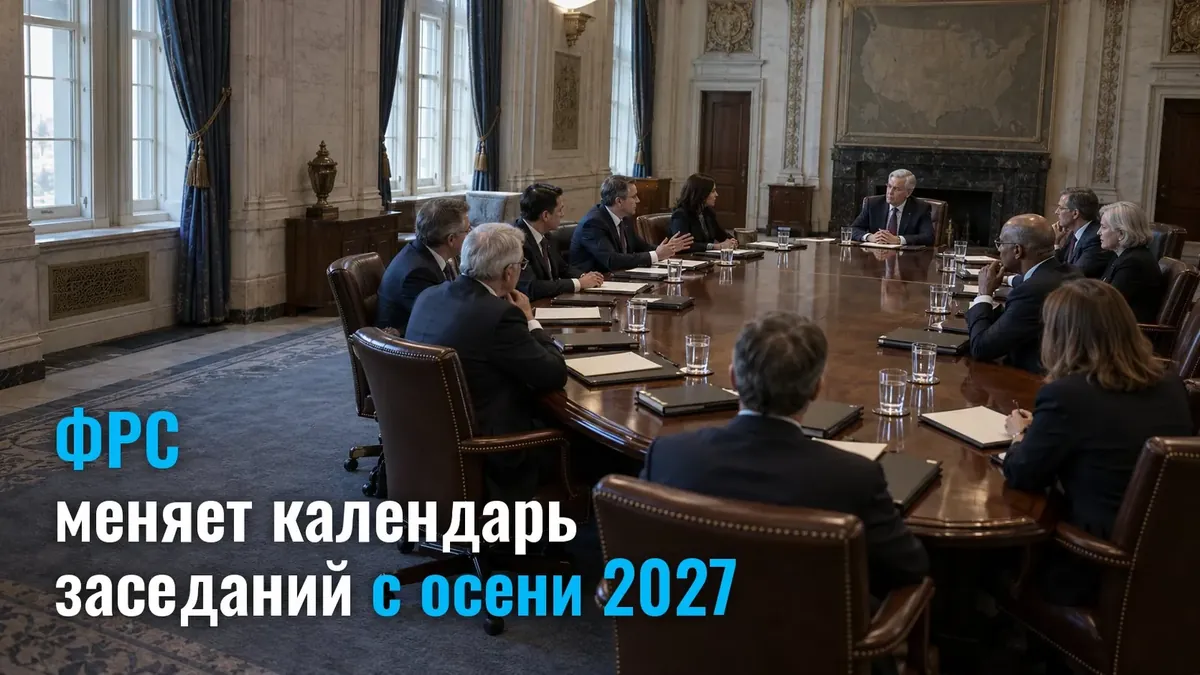
Fed Chair Kevin Warsh announced a change to the FOMC meeting schedule. He said this on October 28 at 21:36 MSK. The reform will take effect in the fall of next year.
The FOMC is the Fed committee that sets the US key rate. It currently meets eight times a year, and each meeting ends with a rate decision. The number of meetings will stay the same - 8 per year. But a decision will not be made at all of them.
This directly affects traders. Rate decision dates are among the most volatile of the year. There will be fewer of them.
What exactly is changing?
The split will happen in two stages. Some meetings will be moved into the strategic category.
- 2027. One of the eight meetings will be held without a vote on the interest rate - it will be devoted to strategy.
- 2028. The split will go deeper: 6 rate meetings and 2 strategy meetings.
How many volatility points will remain. Currently, each of the eight FOMC meetings is a date with a vote, a statement and a press conference. That is eight guaranteed volatility points per year. After the reform, there will first be seven, and from 2028 - six.
What does this mean for a trader?
The trading calendar is changing. Rate decisions will be less frequent. That means each one will carry more accumulated inflation and labor market data. And more expectations gathered into a single date.
- Strategic meetings are not empty. They discuss the Fed's very approach to policy, and the market reads the wording from them too.
- This is about rules, not the rate path. Neither the reform timeline nor Warsh's statement says anything about the direction of the rate.
- Only the timing is changing. In other words, when exactly the market will receive a decision.
The main point: there will be fewer decisions, but each will weigh more. It is convenient to keep all meeting dates in the economic calendar.
When will it start?
The schedule takes effect in the fall of 2027. There is almost a year left until the first meeting under the new scheme.
- Almost a year to prepare. There is time to rebuild your trading plan for the new dates and choose a challenge to suit your style.
Do you keep FOMC dates in your calendar?
Rate decisions will become less frequent. That means the weight of each such date will grow, and the minutes around the release will become even tougher. On your own deposit, it is just a nerve-wracking evening. On a funded account, a second question is added: some programs outright prohibit holding a position in the rate decision window, while others consider it normal trading. You should check the terms in advance, rather than learning about a prohibition from a voided result.