

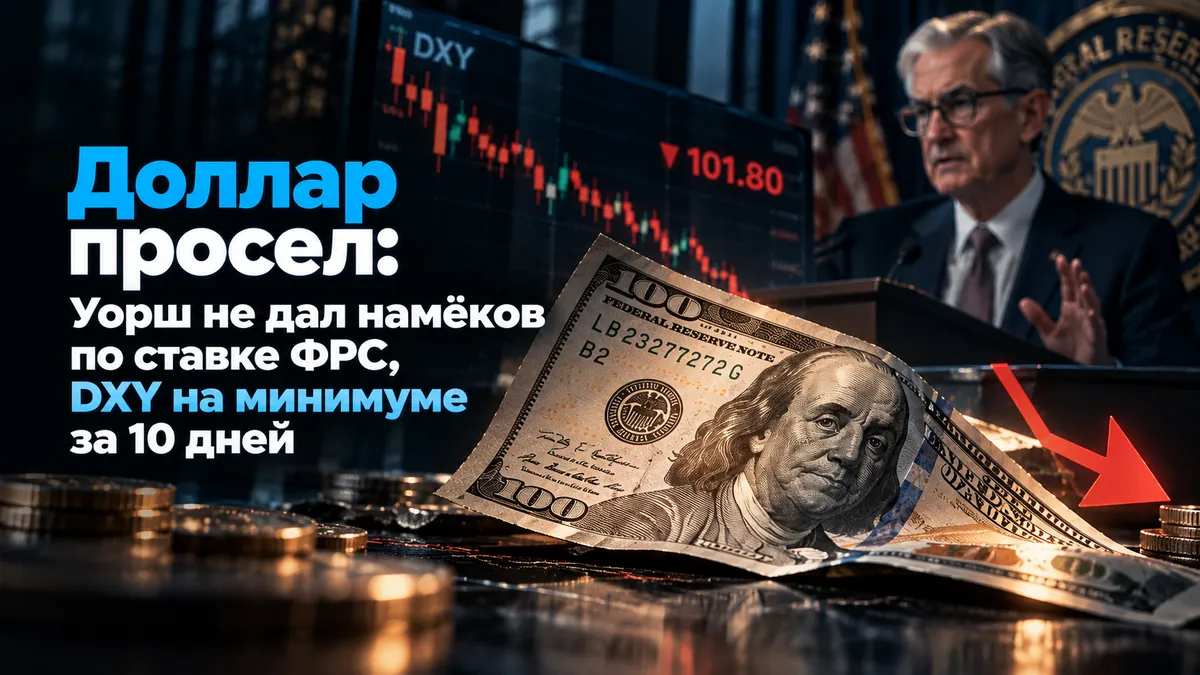
Verbatim: "We made it clear that we will ensure price stability, but I don't believe in pre-judging meetings." Warsh reduced decisions on 2026 to two dates - the meetings in October and December. Also there: "I'm not in the legacy business, I'm trying to get policy right."
Currency reaction over the session: EUR/USD around 1.1230 after rebounding from a 17-month low, GBP/USD at 1.3285 (Wednesday saw a 10-month low of 1.3137), USD/JPY slid from the 158.15-158.20 zone below 158.00, AUD/USD rose to 0.6950. Gold pulled up to $4,200.
Why this happened: the day before, the US September producer price index (wholesale inflation, which leads consumer inflation) came in above forecast and pushed the dollar up. The market expected Warsh to confirm a hawkish stance, but instead got a refusal to give guidance. The speech was rated 5.6 out of 10 on the hawkishness scale, with a baseline of 6.1.
Background from the others: Beth Hammack, head of the Cleveland Fed, doubts that Fed policy is sufficiently restrictive and warns of "entrenched inflation thinking." Bank of England Governor Andrew Bailey said at 05:00 MSK that second-round inflation effects in the UK remain contained so far.
Technically, DXY holds above the 20-day moving average at 101.63, relative strength index 56.79. The nearest forks for the dollar are those very October and December meetings.
Were you long the dollar into Warsh's speech?
A speech without a single number, yet the euro, pound and yen moved within a minute - for the dollar that's an ordinary working day. In a prop firm account, such minutes run into the rulebook, not your analysis: somewhere entering a couple of minutes before the speaker and after him counts as a violation, somewhere the daily loss is measured by equity including floating losses. These lines are read in the rules, not learned from an account closure email. A filter by conditions leaves only those programs where your style of trading forex is allowed.