

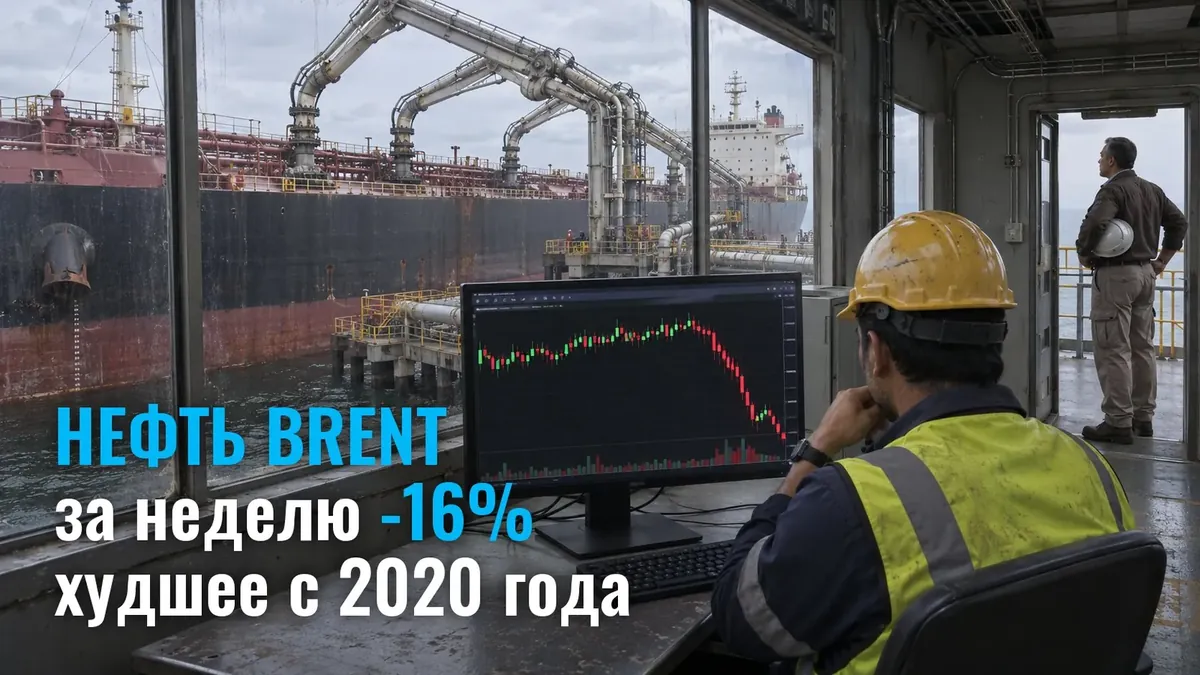
Brent crude fell 16% last week. The price has not dropped this sharply in any single week since the start of the coronavirus pandemic. On Monday a barrel costs about $96.45 versus Friday's close of $98.32.
Brent is the main global crude grade, and the per-barrel price is calculated from it. The war risk premium is now coming out of that price. The risk premium is the part of the price the market pays out of fear of supply disruptions.
This directly affects traders. Cheaper oil removes some of the inflation fears, and on Tuesday the US inflation report comes out.
What is happening to the price?
By 09:40 Moscow time Brent was $1.87 (-1.9%) below Friday. Trading was choppy.
- $97.50 - Monday's open
- $98.35 - the high by 07:27 Moscow time, after which the price went down again
- $91.30 - WTI at the same moment, up 0.5%
- $93.22 - last week's low
- $93.52 - the close of the January contract on Wednesday, November 4
WTI is the American crude grade.
Why did the war premium go away?
Trump lowered the temperature. In a CNN interview he called new strikes on Iran "highly unlikely" while talks are underway on ending the conflict and opening the Strait of Hormuz.
Donald Trump: "it depends on whether they sign a very strong agreement".
Has the risk left the market?
Tensions remain, and here is what they consist of.
- Marco Rubio. The US Secretary of State called Iran's demands unacceptable and the talks unproductive.
- Ships at the Strait of Hormuz. Both the American and Iranian sides reported ships hit. Persian Gulf seaborne oil exports pass through this strait.
- The Houthis. They attacked a building in Riyadh and Saudi Aramco offices.
- Tim Waterer. KCM Trade's chief market analyst called Trump's words "more restrained".
The second reason - a glut of oil
JPMorgan considers the market oversupplied. The bank estimated the surplus as follows:
- 1.1 million barrels per day - September
- 1.4 million - October
Even if traffic through Hormuz recovers, such a surplus prevents a quick return to October prices.
What next?
- US inflation for October. Tuesday, November 10, 16:30 Moscow time - the time is in the economic calendar.
- OPEC monthly report. Out on Wednesday.
- Brent reference points. Reviews cite $93 as the floor and $104 as the ceiling.
A side effect. Cheaper oil has already removed some of the inflation fears, and gold rose on Monday on that. If you trade oil, it is worth picking a challenge for your market in advance.
Did you watch Brent crash 16% in a week?
A week like this in oil is a rare gift, and you want to sit in it with more volume than usual. But oil is far from being on every prop firm's list of instruments: some offer Brent and WTI futures, others only currencies and metals. With some programs, a trade at the moment the US inflation data is released counts as a rule violation. CPI comes out on Tuesday at 16:30 Moscow time, and such clauses are worth checking before paying for an evaluation. Selecting by your market immediately removes programs that don't have your instrument.