

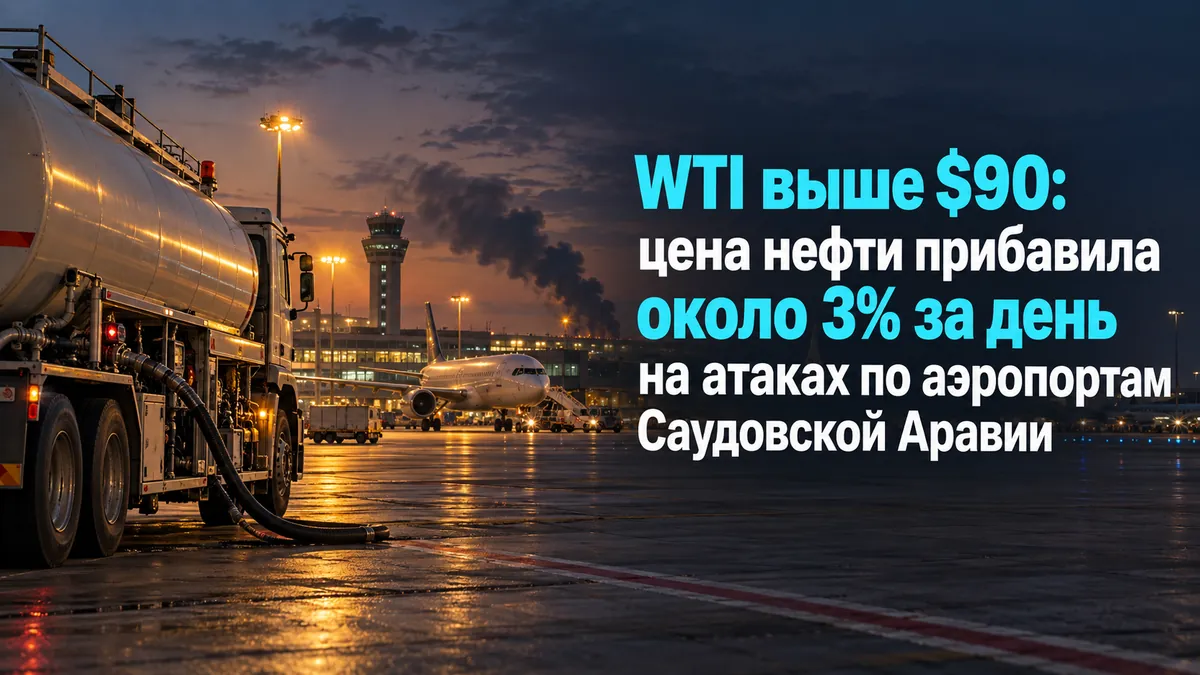
On Thursday, October 8, WTI crude returned above $90 per barrel. The price traded around $90.87, and during the day rose almost to $91.00. The gain was about 3% for the day.
Why oil rose sharply
The main factor was a new escalation of the situation in the Middle East. The attacks were directed at airports in Saudi Arabia. Against this backdrop, the market again began to price in increased risk for the region's oil infrastructure and transport routes. Even without an actual reduction in supplies, the probability of disruptions is already capable of pushing the price higher.
The Strait of Hormuz remains the main risk
The situation in the Strait of Hormuz creates additional pressure on logistics. In the first week of October, nine attacks on vessels were recorded there. That is already about half the number of such incidents for all of September. A significant portion of oil exports from the Persian Gulf countries passes through the Strait of Hormuz. Therefore, any deterioration in shipping security quickly affects the cost of transportation.
Freight is already getting more expensive
The risks in the strait have begun to be reflected in the tanker shipping market. Companies are raising freight rates for large oil vessels. The more expensive the transportation and insurance of cargo, the higher the final cost of supplies. This creates an additional factor supporting oil prices even with stable production volumes.
US inventories also supported the market
Additional momentum came from statistics on US oil inventories. In the week to October 2, crude oil inventories fell by 3.186 million barrels. The market had expected a decline of about 1.9 million barrels. The drop turned out to be noticeably stronger than the forecast. What is happening with imports and exports US oil imports fell by about 53 thousand barrels per day. At the same time, exports rose to 4.7 million barrels per day. This combination further reduces the available supply within the country and supports prices.
What is currently priced in
Part of the current rise is explained not by a real reduction in supplies, but by a geopolitical risk premium. The market is pricing in advance the probability that disruptions may occur later. Therefore, new reports about vessels, airports or oil infrastructure can produce moves of $1-2 per barrel even without a confirmed drop in exports.
What's next
The main factor remains the situation around the Strait of Hormuz. If the number of attacks continues to grow, the oil risk premium may persist. On the fundamental side, the next important reference point is the new weekly US oil inventory statistics. For WTI, the nearest psychological level remains $90, above which the market has already consolidated within the current move.
Did you catch this oil breakout?
A gain of about 3% in a day shows how quickly oil can move on geopolitical news. At the same time, the result of a trade depends not only on direction, but also on the size of the trading account. In prop trading, the company provides access to a large trading nominal after passing a challenge, without the need to accumulate comparable personal capital. This allows you to work with a large volume without having to compensate for a small deposit with excessive leverage.