

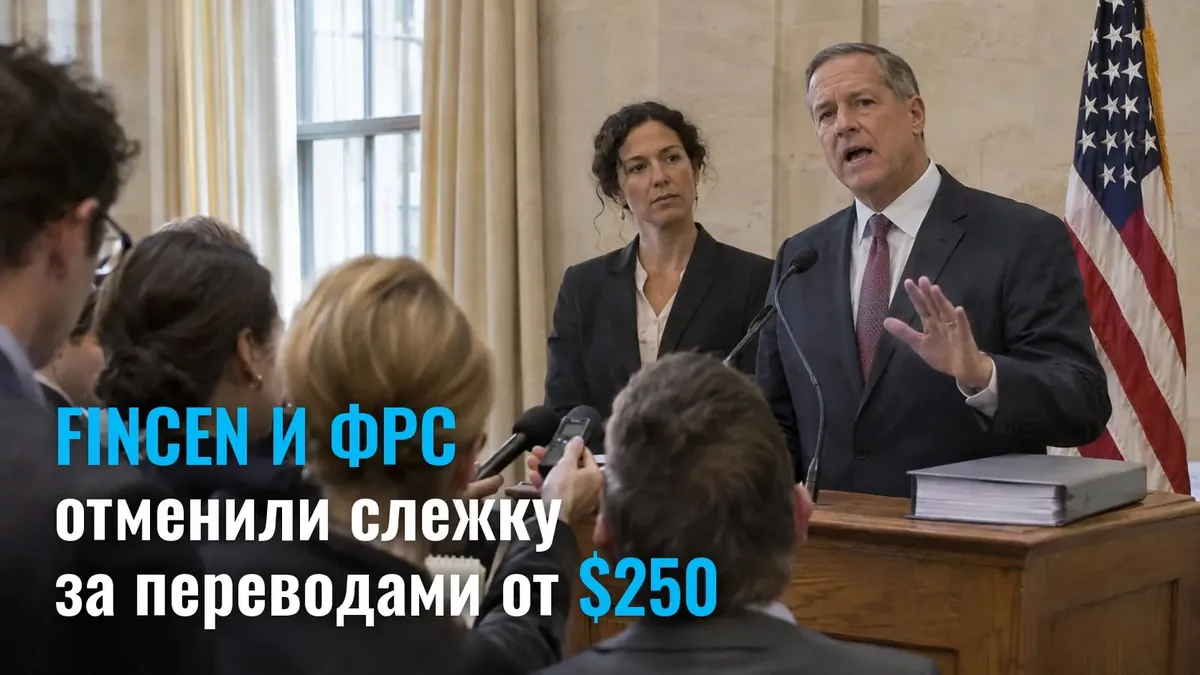
FinCEN and the Federal Reserve Board withdrew the Travel Rule proposal on November 6. The rule would have required collecting sender data for every crypto transfer from $250. The proposal had sat idle for more than five years.
What the Travel Rule is. It is a requirement for a financial institution to record who sent the money before passing the transfer on. FinCEN is the financial intelligence unit at the US Treasury; it writes anti-money-laundering rules.
Why this matters to a trader. Reporting on transfers between exchanges and wallets is not getting stricter.
What exactly was withdrawn?
The threshold stays the same. Currently, an organization records the sender's name, address and account details for transfers starting at $3000.
- $3000 - the current data disclosure threshold
- $250 - the threshold proposed in 2020
- Almost all everyday transactions would have fallen under disclosure with the new threshold
The proposal is withdrawn. Regulators no longer intend to lower the bar to $250.
Why did regulators change their minds?
FinCEN gave three arguments.
- Time. More than five years have passed since the proposal was published.
- The market. The convertible virtual currency market has changed over that time, and the previous version no longer reflects reality.
- Future amendments. They need to be assessed in light of new circumstances so that the rule is fit for purpose.
The original motive. The threshold was to be lowered because illegal money had started being split into small transactions.
Is this already the second withdrawal?
Yes, the second in a month. In October 2026, the US Treasury withdrew a separate proposal on self-hosted wallets and rules on mixers.
- Self-hosted wallet - when the owner holds the keys themselves, without an exchange intermediary
- Mixers - services that obfuscate the trail of a transaction
How did the industry react?
Coin Center. The organization had objected to the $250 threshold for years and called it warrantless financial surveillance. According to it, the withdrawal closes several long-pending proposals at once.
Crypto Council for Innovation. The organization's head, Ji Hun Kim, called the decision correct: a low threshold would have created an excessive burden on organizations, especially for cross-border transfers.
Key point: reporting rules for transfers between exchanges and wallets are not getting stricter. Regulators did not name specific timelines for a new version of the document, so it is more convenient to track the dates via the economic calendar.
Transfers got easier. But your position is the same
The regulatory backdrop for crypto has been easing all year. But that doesn't make your deposit any bigger. You move the same couple of thousand between platforms and take from a good move an amount that it's painful to call a result. Prop trading works differently: you pass a selection process at a company, trade its account within its loss limits and split the profit under a contract. Understanding the mechanics is cheaper to do in advance, before the market delivers another strong day.