

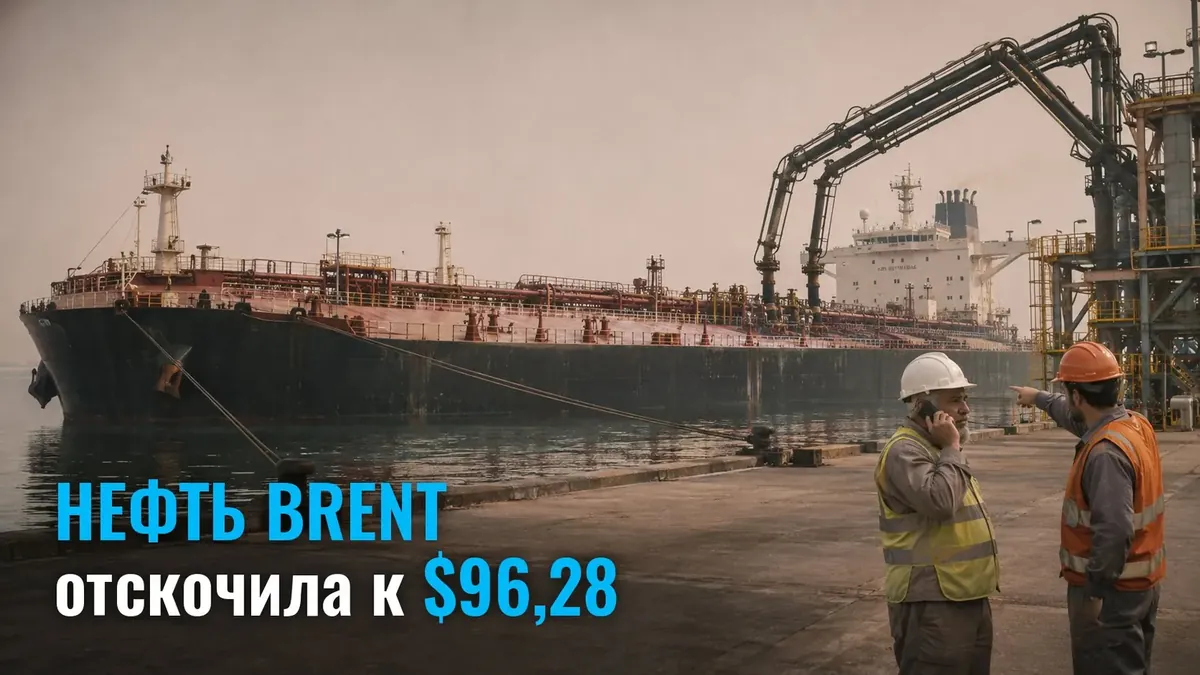
Brent crude rose in price after Iran's strike on a US base in Bahrain. On Monday morning, the January futures contract was worth $96.28: +0.46% versus Friday. During the Asian session, it had previously fallen by almost 1%.
Brent is the crude oil grade used to calculate world prices. The January futures contract is a contract for the delivery of this oil in January.
The price was reversed by weekend news from the Persian Gulf. It is being pressured more strongly by the oil surplus calculated by the International Energy Agency. A surplus means that more oil is being produced than bought.
Monday's quotes
- $96.28 - Brent at 09:21 Moscow time versus $95.84 at the close on Friday, November 13.
- $89.1 - WTI was trading near this level, adding 0.6%. WTI is the American crude oil grade.
- $95.37 - the overnight low: the futures contract first lost 47 cents.
- 2.5% - roughly how much last week lost, this is the second decline in a row.
What pushed the price up
- The strike on Bahrain. On Sunday, Iran struck a base of American helicopters. This is Tehran's first attack on a Persian Gulf country in several weeks.
- Mines in the Strait of Hormuz. Iranian state TV raised the number of ships that hit mines from three to five. An attack on one tanker has been confirmed, the crew is safe. The Strait of Hormuz is the narrow exit from the Persian Gulf, tankers pass through it.
- A third aircraft carrier. A third American aircraft carrier has arrived in the region.
- Tehran's proposal. Iranian Deputy Foreign Minister Kazem Gharibabadi reported a two-day plan to cease hostilities and open the strait. The next move is Washington's.
What pulls the price down
Supply is working against the military headlines. Last week, the IEA calculated production in the fourth quarter at about 105 million barrels per day.
- 1.7 million barrels per day - by how much production exceeds demand, this is the first supply overhang since February.
- 71 million barrels - emergency sales from state reserves, they will continue until the end of February.
- 41.23 million barrels per day - this is how much OPEC+ is pumping.
Benchmarks for the trader
The war premium is already in the price. The half-percent rise after the strike on a Gulf country shows how much of it the market is holding.
Key point: the week's support levels are $98 on top and $91 below.
What to watch next:
- Washington's response to Tehran's two-day plan.
- State reserve sales, they continue until the end of February.
- Access to oil at your prop firm: this can be seen in the prop firm catalog and when selecting a challenge.
Did you trade oil on these headlines?
Overnight the futures contract opened in the red, and by morning it had moved into the green. The entire move passed by those who do not have oil in their list of instruments: not all prop firms offer Brent and WTI. Where they do, there is a separate line stating whether a position can be held through the weekend gap and whether a trade on a military headline is a violation. These lines decide the outcome of a challenge no less than the entry point. It makes sense to read them before the next news from Hormuz.