

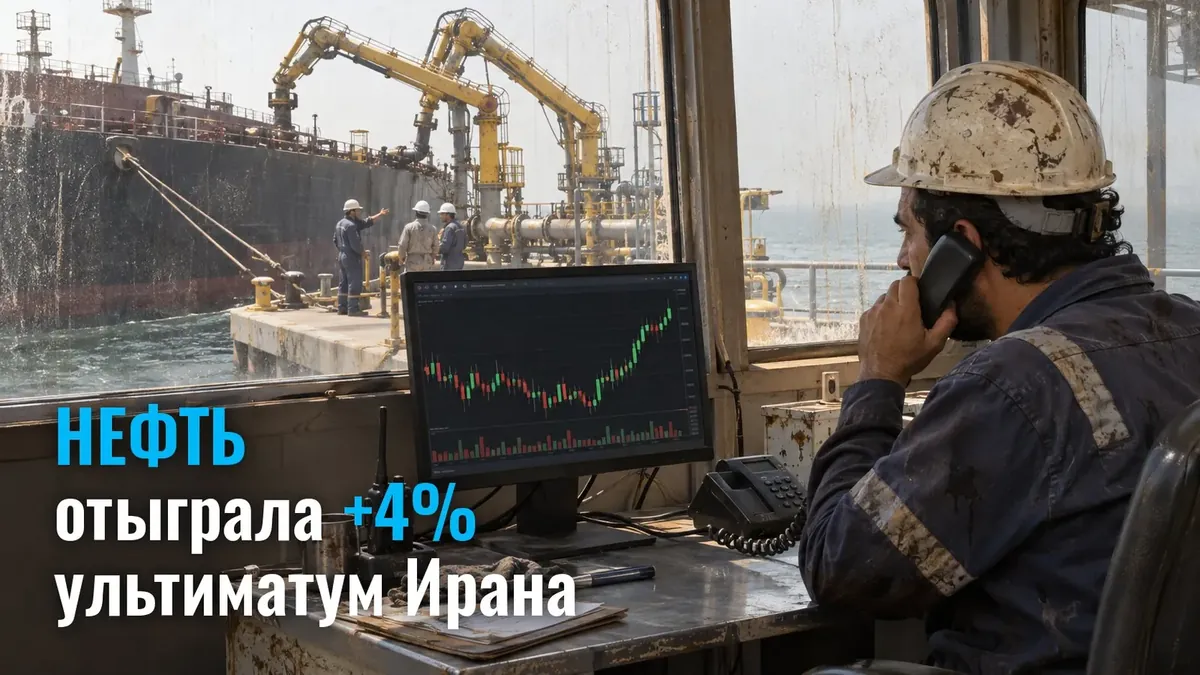
Iran passed a proposal on its nuclear program to the US through Qatar. But Tehran is ready to sit down at the table only after Washington fulfills all seven of its demands. WTI crude oil reacted with a rise: plus 4% on the evening of November 5 and another about 2% on the morning of November 6, to $90.15 per barrel.
WTI is an American crude oil grade. The market uses its price as a general benchmark. Qatar acts as an intermediary here: countries pass signals through it when they do not talk directly.
For a trader, this is volatility returning. Oil quotes went from a drop to a rebound within a day, and the reason lies in headlines, not in the chart.
How sharp was the reversal?
A day earlier, oil was falling by about 10%: the market was pricing in de-escalation.
- 23:03 MSK November 5 - the reversal delivered plus 4%.
- 07:12 MSK November 6 - another plus 2%.
- $90.15 per barrel - the level after two moves.
Why did the market reverse?
The reason is specific. The FARS agency reported: Iran sees no possibility of taking further steps in diplomacy until the US fulfills all 7 conditions.
- Trump's harsh rhetoric. Donald Trump stated that Iran cannot do anything on its nuclear program without US approval. The conflict, according to him, will end when he himself wants it to.
- Tehran's contacts with Moscow. Mohsen Rezaei met with Vladimir Putin the day before.
- The de-escalation scenario fell apart. The sell-off on Wednesday was triggered by the US elections on November 3. The Democrats took both the House and the Senate, and the market decided that pressure on Trump to end the eight-month conflict would increase.
Supplies are still flowing, meanwhile. Transit through the Strait of Hormuz has already recovered. This is the narrow outlet from the Persian Gulf through which the region's seaborne oil exports pass.
What are market participants saying?
Reuters has counted at least 5 incidents involving vessels in the gulf since Sunday - the threat to commercial traffic remains.
- Rebecca Babin, CIBC - the senior energy trader called the sell-off a possible overreaction and described the market as being in a "shoot first, ask questions later" mode.
- Bob McNally, Rapidan Energy - the company president and former adviser to George W. Bush assesses the chances of military escalation as higher.
The main point: the oil price is now moving on headlines from Tehran and Washington, not on the balance of supply and demand.
What to watch next?
Technically, WTI is holding above the 100-day moving average at $86.25. RSI is around 41, the nearest resistance is $96.75.
The next point for all markets is the US employment report on Friday at 16:30 MSK. The publication time is available in the economic calendar.
Did you hold oil overnight into Thursday?
You either traded these swings or watched them with your terminal closed. Oil at prop firms works very differently. Somewhere there are no contracts on it at all, somewhere the leverage is cut, somewhere holding a position through the weekend is prohibited. And headlines from Tehran arrive right on Saturday. These points are worth finding in the rules before you open your first oil trade. A filter by instrument and style will leave only suitable programs.