

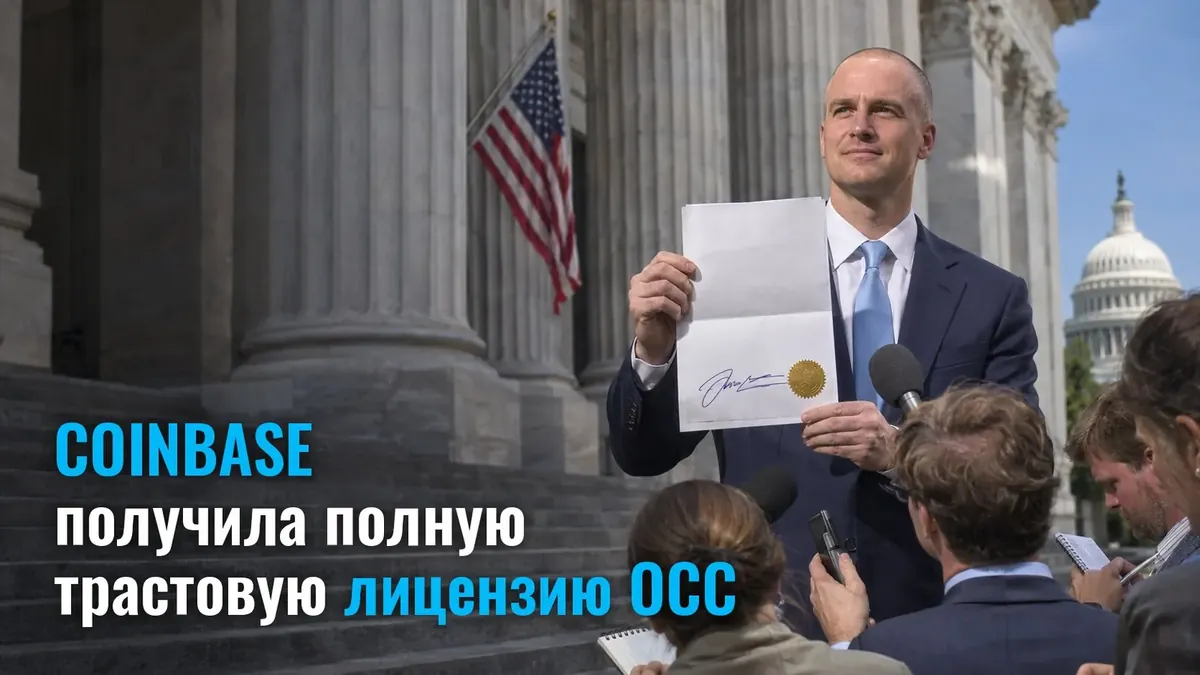
Coinbase has received a full federal trust charter. The OCC issued the approval, and the company itself announced it on November 9. Previously, the status was conditional.
The OCC is a federal US bank regulator. Its full name is the Office of the Comptroller of the Currency. A trust charter permits holding other people's assets and conducting payments under the supervision of this regulator.
What has changed. Previously, the largest American crypto exchange operated under individual state licenses. Now its cryptocurrency custody and payments fall under federal supervision, and for a trader this is a signal: crypto is going deeper into the US financial system.
What does the charter provide?
The entity is called Coinbase National Trust. It received preliminary approval in April 2026.
- Custody of digital assets and payments - permitted under federal supervision.
- Deposits and loans - no. The exchange does not become a regular bank. A trust charter does not grant that right.
- Several months of preparation - the company was building out compliance, hiring staff and undergoing the regulator's review.
Why are there more and more such applications?
Coinbase is not first in this queue.
- GENIUS Act. The law opened the path for federal trusts to issue lawful stablecoins. A stablecoin is a coin whose rate is pegged to the dollar.
- Ripple. The company received a full OCC trust charter in October 2026.
- World Liberty Financial. The Trump family's company still has conditional status.
What does this mean for a trader?
The main thing for a private trader is where the coins are held. Coinbase's custody and payments are now under the supervision of a federal regulator, not just under state licenses.
Ryan VanGrack, Coinbase vice chairman: "For years we have asked for clear rules and strict oversight." He called the approval another major step in embedding digital assets into the core infrastructure of the US financial system.
Trading crypto on someone else's capital? Check the terms of platforms in the prop firm catalog, and the database on rules and payouts in the academy.
What happens next?
The Independent Community Bankers of America has sued the OCC. This is an association of local US banks.
It insists that the regulator exceeded its authority by handing out trust charters to crypto companies.
- The court's ruling - will determine whether the issued statuses remain in force.
- World Liberty Financial's status - still conditional, like Coinbase's before November 9.
Infrastructure is strengthening, but the math stays the same
Every such news item brings crypto closer to big money. But the trading result still comes down to the size of the deposit: a properly executed idea on five thousand yields fifty dollars. In prop trading, the trading notional is provided by the company: you pass a paid evaluation, trade within its loss limits and split the profit under the agreement. While the market is maturing, it is worth understanding this part of the industry too.