

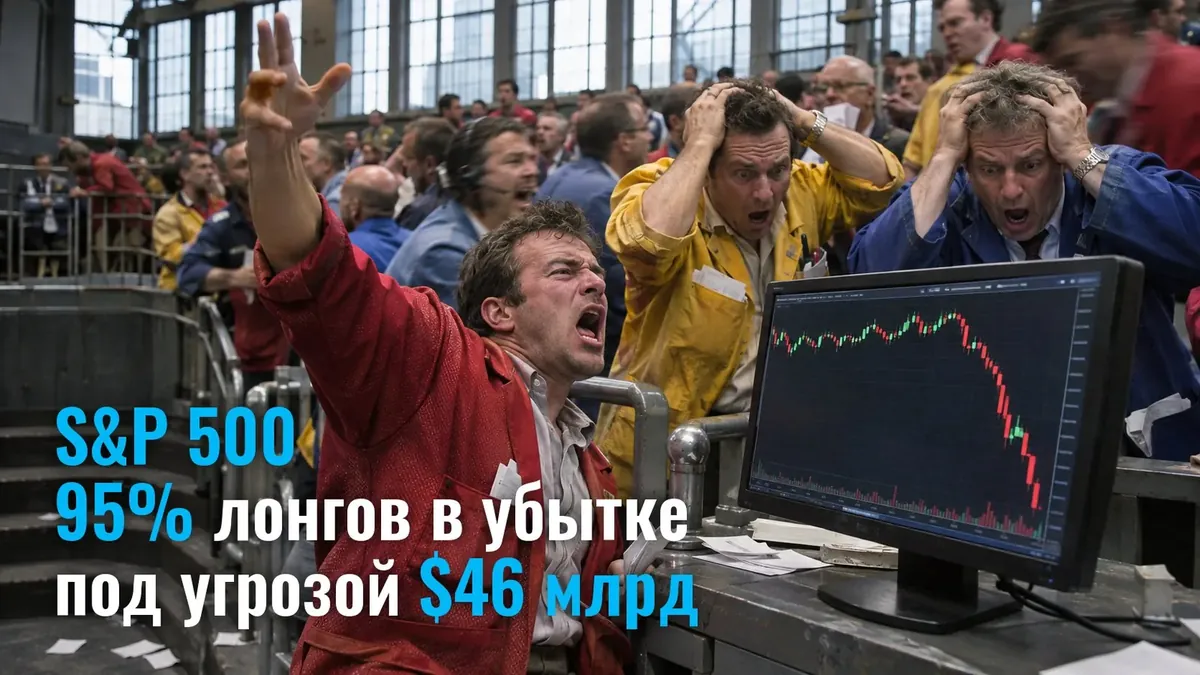
Citi reported on November 17: almost all longs in S&P 500 futures are sitting at a loss. According to the bank's calculations, 95% of such positions are underwater, and their volume is $46 billion.
The S&P 500 futures contract is an exchange-traded contract on the index of the 500 largest US companies. Both funds and private traders use it to hold leverage. A long is a bet on price growth.
This directly affects traders: clusters of losing positions of this size make moves sharper and wider than the usual daily range.
What's in Citi's calculations?
The bank calculated entry prices. 95% of long positions in the contract were accumulated above the current price, meaning their holders are already in the red.
- 95% - the share of long positions in the futures contract accumulated above the market.
- $46 billion - the volume of longs that were at a loss at the time of calculation.
- November 17 - the day Citi cited these figures.
Why does the decline accelerate?
Liquidation is at work. This is the forced closing of a position when the margin collateral for leverage is no longer sufficient.
- The collateral ran out. The position is forcibly closed; there is no more margin for leverage.
- The price goes lower. Such closures push the market down.
- Domino effect. The price hits the next batch of losing longs, and those get wiped out too. Citi calls this effect a cascade.
What does this mean for a trader?
The leverage setup is one-sided. Borrowed money in the index is almost entirely gathered on the buy side, and this side's margin of safety is thin.
Key point: clusters of losing positions of this size make moves sharper and wider than the usual daily range.
If you trade indices, you can find a suitable instrument in the calculator.
What's next?
There are no figures for levels. Citi did not name specific levels from which the cascade is triggered.
- $46 billion - the volume of losing longs at the time of calculation. Positions already closed are not included in this amount.
- US market events - in the economic calendar.
Have you held a long on the index in your own deposit?
The levels on the chart are the same for everyone, so you would have played such a drop the same way regardless of your balance. Only the amounts in the account would differ. The same entry on a deposit of a couple thousand buys you lunch; on a large account it closes out the month. Prop trading works like this: the company gives access to its account to those who have passed a paid test of risk discipline, and shares the result according to a pre-stated percentage. It makes more sense to look at the mechanics now, while the next cascade on the index hasn't started yet.