

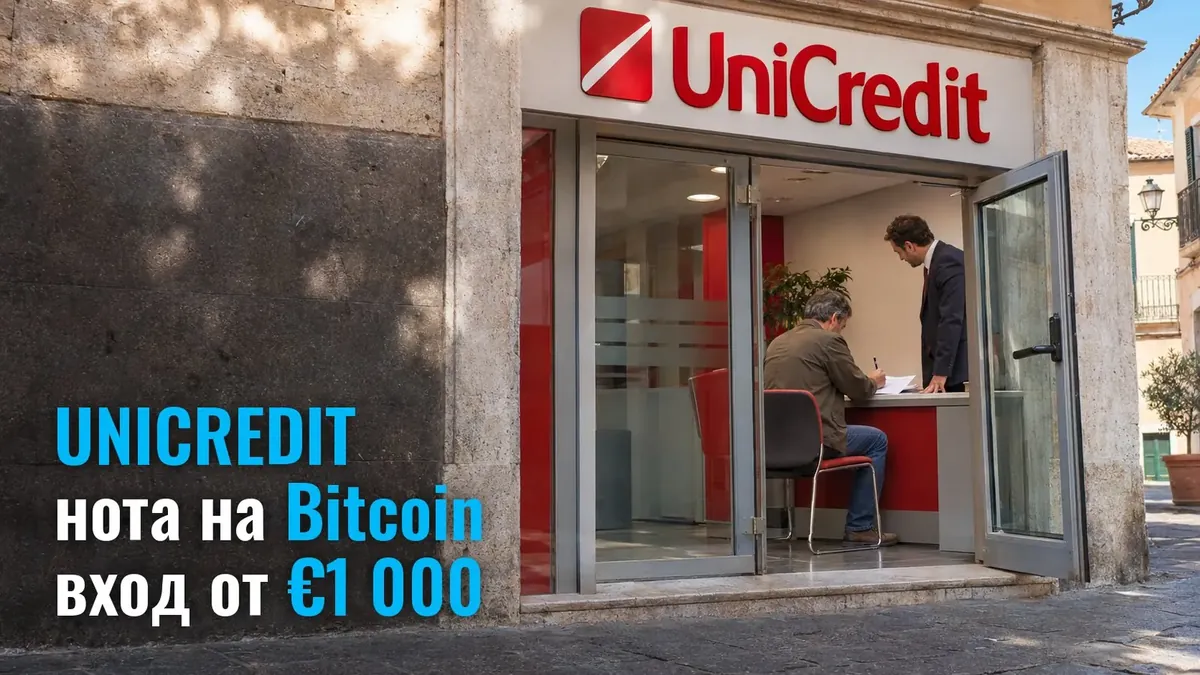
UniCredit has opened a subscription for retail clients in Italy to a structured note linked to the price of Bitcoin. The Italian bank takes funds from €1,000 and for a term of six years.
A structured note is a debt instrument of the bank. The return on it is calculated from the price of another asset; here, that asset is Bitcoin. A retail client is a private individual who comes to the bank with their own money.
The bank returns the invested amount at maturity, and the upside under standard terms is capped at 65%. What matters to the trader here is the channel itself: the bank turns demand for Bitcoin in Europe into its own instrument.
How is the note structured?
The client never sees the coins. The cryptocurrency does not go to them: you can't withdraw it to a wallet or sell it at night.
- €1,000 - the minimum ticket for the subscription.
- Six years - the term to maturity.
- 65% - the cap on the return for the entire term.
The subscription is arranged through UniCredit advisors.
What does the client pay for protection?
Protection at maturity means that after six years the bank returns the invested amount. The price for this was the cap on the return.
- Return cap: whatever the rise in Bitcoin, the client will receive a maximum of 65% for the entire term.
- Credit risk: the payout relies on UniCredit's solvency; the obligation sits on the bank's balance sheet.
Why are European banks doing this?
European banks are entering crypto from different angles. German Sparkassen and Deutsche Bank have chosen their own formats.
- Deutsche Bank - custody of cryptocurrencies for paying clients.
- Sparkassen - Bitcoin trading via DekaBank directly in the banking app.
What does this mean for the trader?
The channel is changing. Retail interest in Bitcoin in Europe is being packaged into a bank instrument with a term, a return cap and the bank's credit risk.
The key point: spot and futures don't set such a cap, but no one returns the invested amount there either.
The terms of prop firms are collected in the catalog, and how challenges and payouts work is in the academy.
Do you hold BTC in your own deposit?
Your horizon on BTC is days and weeks. It runs up against the size of your deposit: with an account of a couple of thousand, even a caught rally gives an amount not worth sitting up nights over the chart for. In prop trading, the trading account is provided by the company: a paid selection, its risk limits, a pre-agreed share of profit for the trader. It's calmer to work through this path now, before the next strong move in crypto begins.