

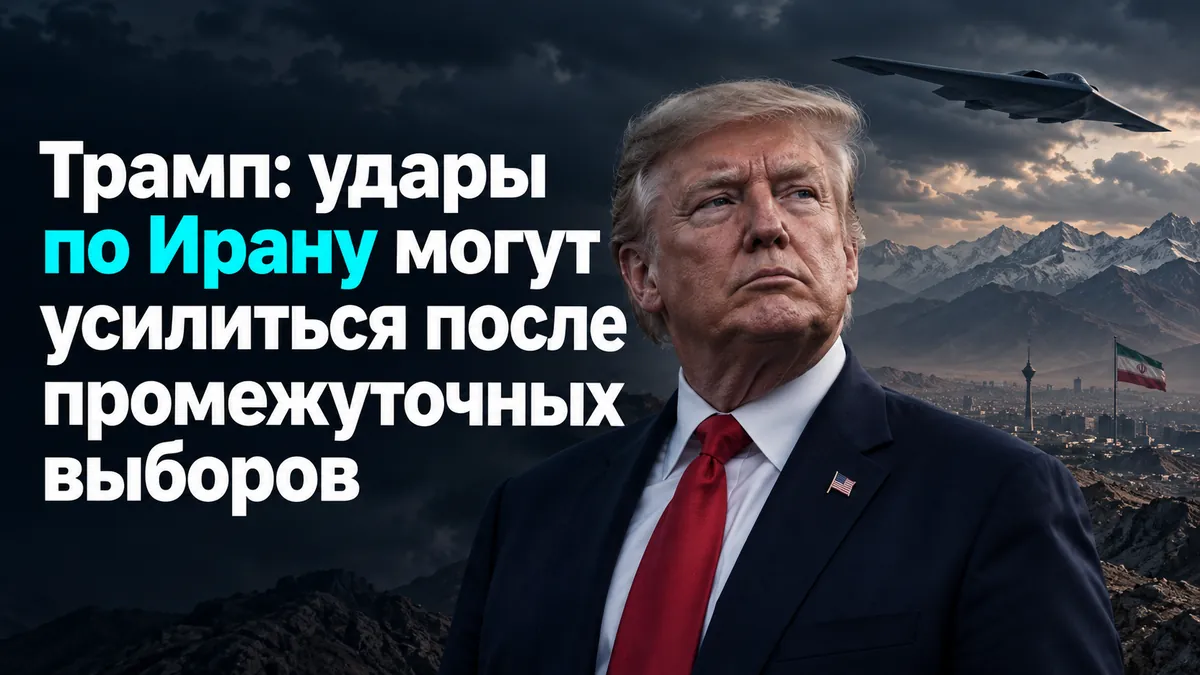
In an interview with TIME magazine, US President Donald Trump said that in the absence of an acceptable agreement with Iran, American strikes could resume or intensify after the midterm elections. The conflict has been ongoing for about seven months. US spending has already exceeded $25 billion, and a prolonged military campaign is increasing the strain on stockpiles of certain types of ammunition.
The war has dragged on
The conflict began in March 2026. Initially, Trump expected it to take about 4-6 weeks, but about seven months have already passed, and a final agreement still does not exist. Against the backdrop of the protracted conflict, the US is expanding production of certain types of weapons and interceptor missiles.
Why the Strait of Hormuz matters for the market
The main factor for the oil market is the situation around the Strait of Hormuz. This is a narrow sea route out of the Persian Gulf, through which a significant portion of the region's oil exports passes. Iran is capable of restricting the passage of tankers, and any disruptions to supplies quickly affect energy prices. Trump also said that he rejected Iran's proposal to open the strait, considering the proposed terms insufficiently favorable.
Oil affects inflation
Rising energy prices are reflected in US consumer prices and amplify inflationary risks. Gasoline in the US has risen noticeably in price since the start of the conflict. Together with tariff policy, this complicates the situation for the Fed and affects rate expectations, bond yields, and the cost of credit. Thus, the situation in the Middle East is directly linked not only to the oil market, but also to financial conditions in the US.
What's next
Trump did not signal readiness to simply end the military campaign without an agreement. If the negotiations do not lead to a deal acceptable to the US, strikes on Iran may be resumed or intensified after the midterm elections. At the time the statements appeared, there was no noticeable immediate reaction in the main markets. For oil, the main factor remains the situation around the Strait of Hormuz and the further course of negotiations between the US and Iran.
Traded oil on geopolitics?
Oil can move sharply on such headlines, and the move often begins immediately after the news appears. In prop trading, it is important to check the terms of a specific program in advance. With some prop firms, oil is unavailable for trading, while in other programs restrictions may apply to trades during the release of important news. Such conditions are better checked before buying a challenge, and not after violating the account rules.