

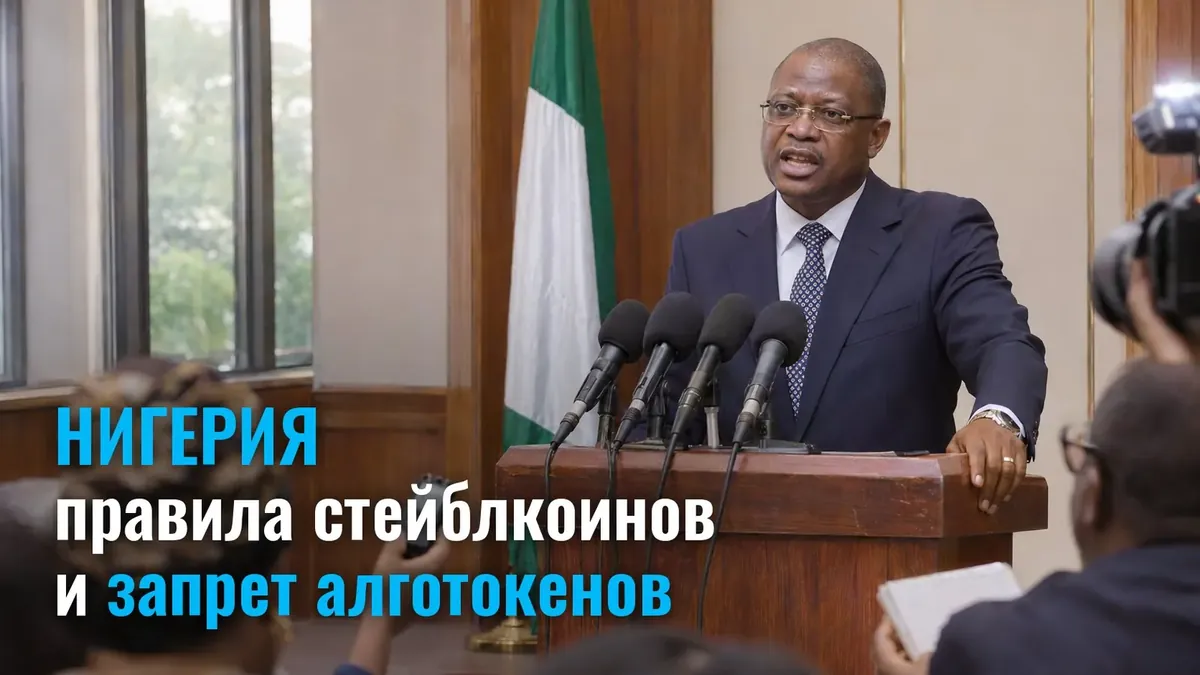
There will be two types of licenses: a separate one for tokens pegged to the naira (Nigeria's national currency), and a separate one for tokens on foreign currencies. A general business permit is not enough - the issuer is required to obtain approval for each individual asset it issues.
The reserve requirements are straightforward: every issued token must be backed by collateral. In addition, issuers fall under anti-money laundering rules - customer verification, reporting, disclosure of transactions.
A separate clause prohibits algorithmic stablecoins without sufficient reserve backing. These are coins that maintain their peg not with real money in accounts, but through the automatic minting and burning of a linked token. It was precisely this design that collapsed in the Terra/UST saga, when holders lost tens of billions of dollars.
For a trader, the takeaway is this: Nigeria is one of Africa's largest crypto markets, and settlements there largely go through stablecoins. After November 5, unlicensed issuance is illegal, and operators have clear deadlines for paperwork. By December 5, it will become clear who has registered and who is leaving the market - and that will determine which coins continue to be used for settlements there.
Do you keep part of your account in a stablecoin?
News like this is read for one reason only - so that the cash between trades doesn't go anywhere. Only the size of the account itself doesn't change because of regulation: on two thousand, even a correct idea produces a result the size of lunch. In prop trading, the company puts up the capital for trading: you pass a paid selection process according to its risk limits and then work with its account for an agreed share of the profit. It's calmer to work through this mechanic in advance, rather than on the day the market has already moved.