

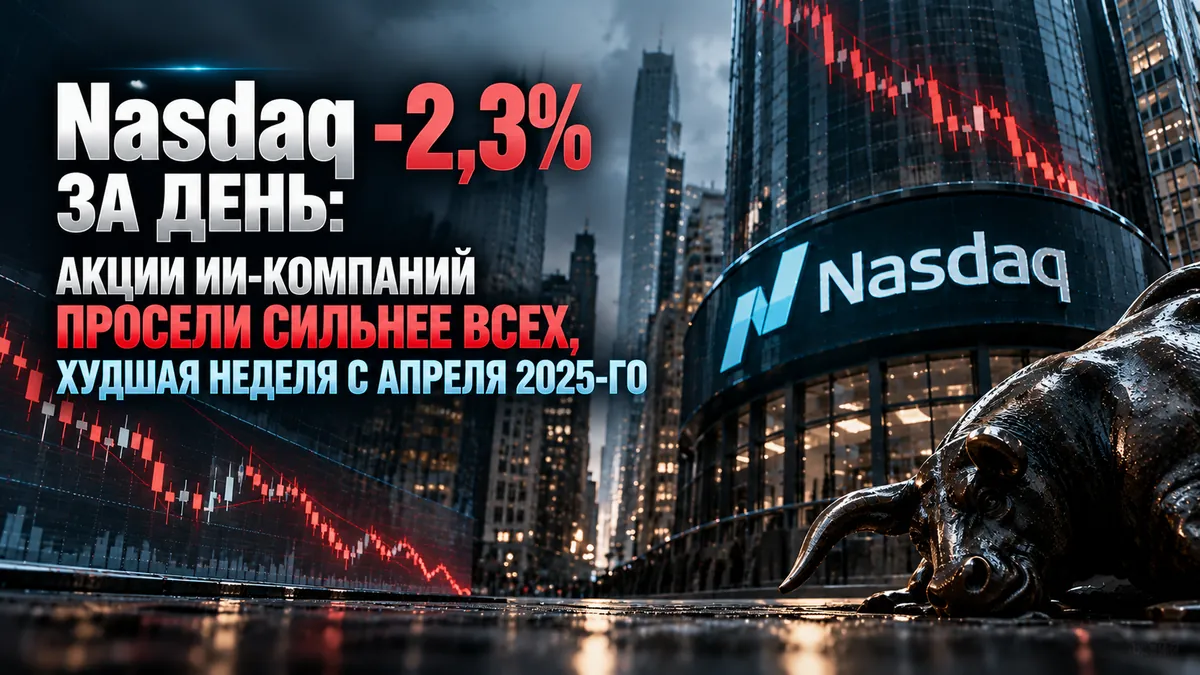
The sell-off was broad-based: the SOX semiconductor index fell for an eighth straight session. Gold barely moved - down $2, to $4168. The yield on 10-year US Treasuries fell by 2 basis points, to 5.09%.
The reason is a second day of rumors about problems at a large fund invested in AI. The hardest hit were companies that rent out computing capacity for AI: the market is discussing that CoreWeave may pay off its debts by issuing new shares. Funding problems show how hard it is to raise capital for the promised buildout of AI infrastructure.
Oil went the opposite way: WTI jumped by $3.40, to $101.37 per barrel, with the gain coming in the second half of the US session. The trigger is cited as the risk of a US strike on Iran over the weekend - 2.5 weeks remain until the midterm congressional elections.
The dollar weakened again, and the best currency of the day was NZD - a rarity for a session in which US indices lose 1-2%. Yet the data came in strong: import prices for September +1.1% versus a forecast of +0.8%, industrial production +0.7% versus +0.4%. The budget deficit for fiscal year 2026 was the largest in five years.
Next up is the peak of earnings season: Meta and Tesla report this week.
Did you trade this gap-down on the indices?
Indices live by gaps: down 2.3% in the evening, and by morning the price is somewhere else entirely - and the daily limit is used up without your participation. Prop programs regulate this differently: in some, holding a position overnight is routine; in others, a trade at the moment of Meta's report is a direct violation. You read such clauses before paying for a challenge, not after your account is blocked. Meta and Tesla report this week.