

How big is this?
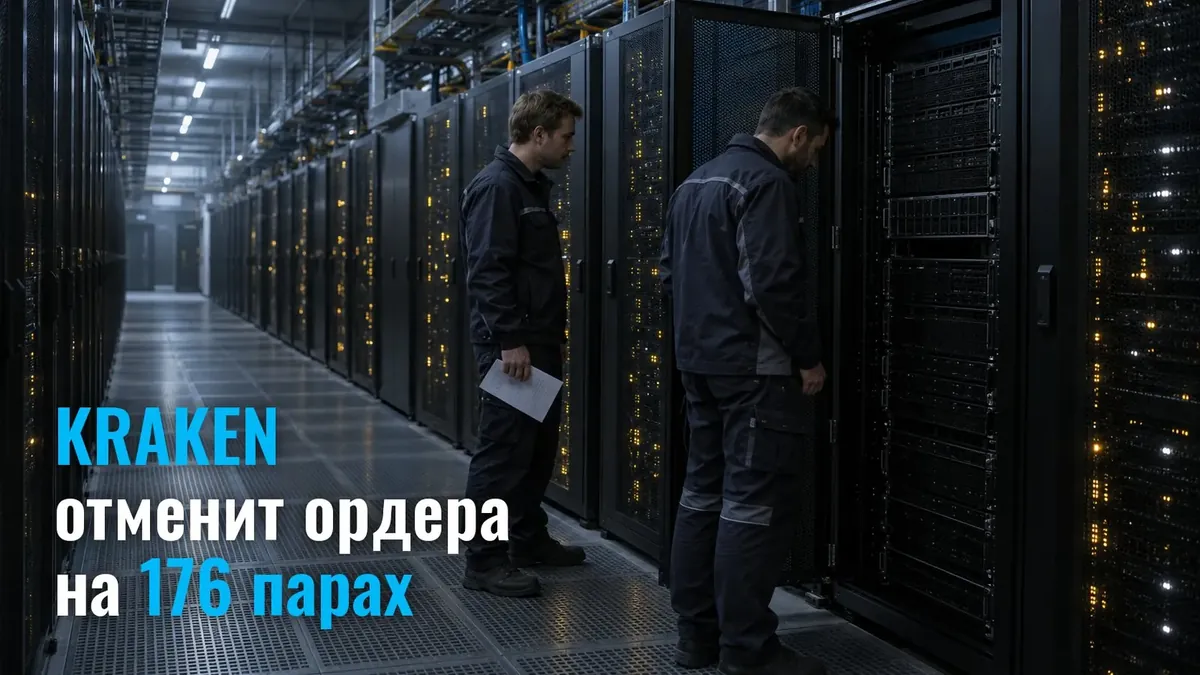
Scale. This isn't about a couple of exotic tickers. 176 pairs is a significant chunk of the exchange's order book. The replacement was announced on October 28.
What a synthetic market is. It's an instrument that tracks the price of a regular pair but trades as a derivative contract rather than as the underlying asset held in hand.
- Chart and quote - look largely the same
- Execution mechanics and fees - different
What changes in fees?
The key detail for traders: the new markets will charge a taker fee even on limit orders.
Normally, a limit order sitting in the order book is charged as a maker order. It costs less or gives a rebate.
The main point: here the maker/taker distinction disappears. You place a limit order - you pay like someone taking liquidity.
What does the trader risk?
The practical risk affects everyone who leaves orders open for a long time.
- Old limit orders. Orders that have been sitting in the order book for weeks will be empty after the migration.
- Bots and grids. Any algorithms tied to these pairs will be left without orders.
- Stops and pending entries. They'll have to be moved manually.
What to do before the migration?
Two steps are worth taking in advance.
- Export the list of your open orders on the affected pairs
- Recalculate your strategy for the new fees
In high-frequency and grid trading, the maker/taker difference eats into results faster than it seems. You can check crypto conditions in the prop firm catalog or find a challenge for your market.
Trading limit orders on crypto?
The exchange changes fees and order types in one move. After that, half the result depends not on your forecast but on the rules by which you're calculated. It's the same story with prop programs: some include crypto as a full list of pairs, others only BTC and ETH. Meanwhile, commissions and swaps are quietly deducted from your drawdown. This is written in the terms of a specific program, and it makes sense to look there before paying for an evaluation. A minute of filtering by instruments and fees saves you from unpleasant discoveries on your very first grid.