

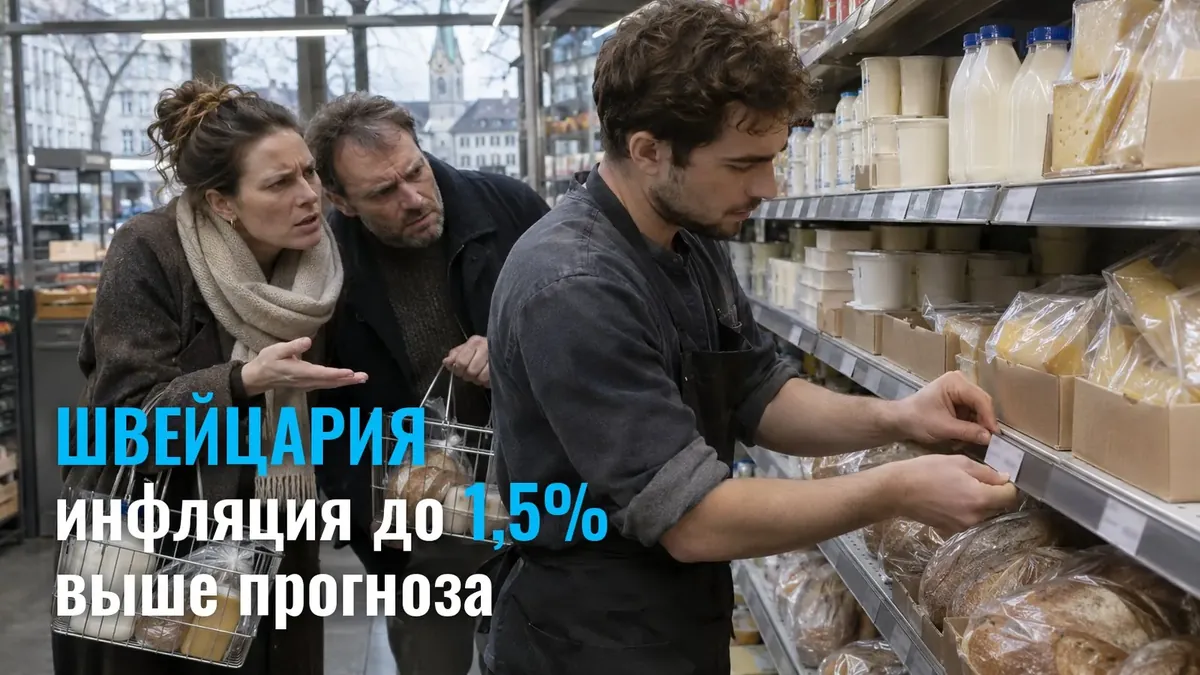
Switzerland has reported inflation for October, and the figures came in above forecast. Annual price growth was 1.5% instead of the expected 1.3%. The monthly figure also exceeded consensus.
CPI - the consumer price index. It shows how much goods and services have become more expensive for ordinary buyers over a period. This is the main figure the central bank uses to decide what to do with the rate.
This directly concerns traders. The Swiss franc is one of the safe-haven currencies, and unexpected inflation moves it against the dollar and the euro.
What figures came out?
The release took place on November 3 at 10:30 Moscow time, exactly on schedule.
- +0.2% for the month - against a forecast of 0% and zero change the month before
- +1.5% year-on-year - against the expected +1.3%
- +1.0% - the annual figure in the previous report
Why is this a surprise?
A miss on consensus on both figures at once. That is the main point of the release.
After two months without price growth, the monthly figure has turned positive again. Annual inflation added half a percentage point in a single report.
What does this mean for a trader?
The franc is back on the list of active instruments. Any surprise in its inflation statistics is watched on the USD/CHF and EUR/CHF pairs.
Key point: statistics above forecast say that price pressure in the country has not faded as the market believed. Swiss statistics have once again become a reason for movement.
What next?
The next reference point is the rate decision. We await it together with comments from the Swiss National Bank.
Until then, the October figures remain a fresh argument in assessing the franc. The meeting date is conveniently tracked in the economic calendar.
Were you in USD/CHF at 10:30?
The entire surprise in such releases fits into the first minutes after publication, and the spread widens at that moment. The question is what the rules specifically allow you to do: some prop firms explicitly prohibit holding a position at the moment statistics are released, for some the franc comes with a reduced volume, and a sharp tick is counted at the worst price against the daily loss limit. This is checked against the rules before paying for an evaluation. A filter by market and style shows where trading on data releases is even permitted.