

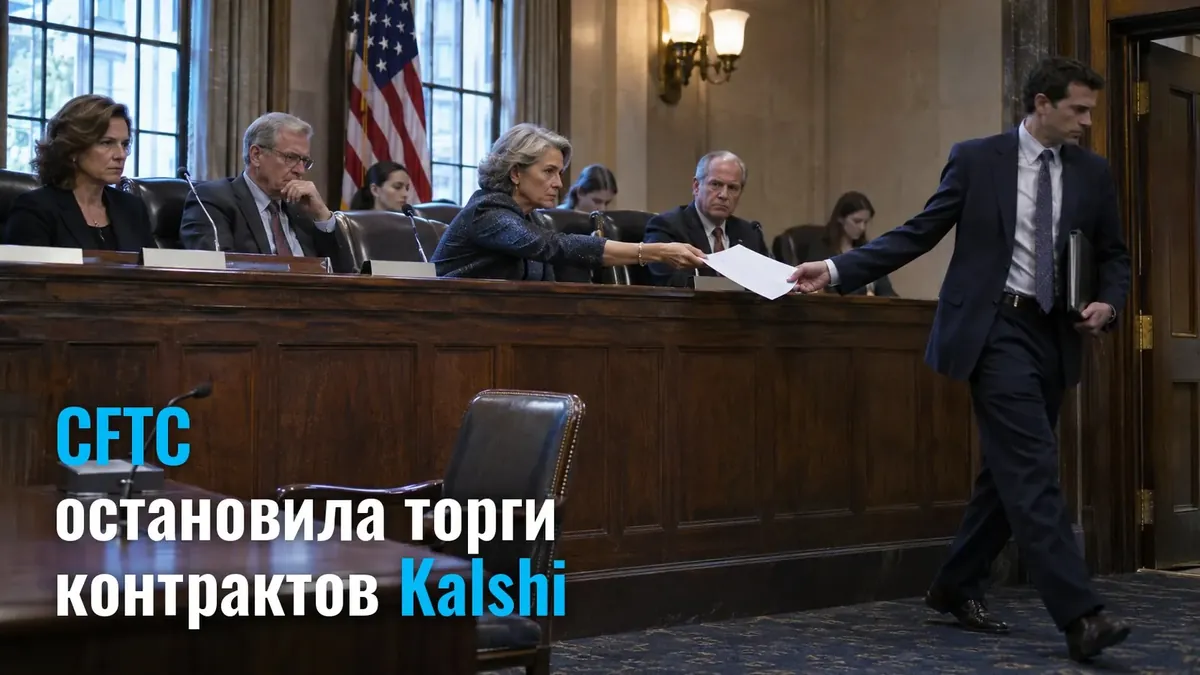
The CFTC has ordered a halt to trading in contracts on Donald Trump's words on Kalshi. The order was issued on November 13. The regulator expects the platform's response by December 11.
Kalshi is an American event contract exchange. The outcome of a news event is traded there like a regular futures contract. The platform's license was issued by the CFTC itself, the U.S. Commodity Futures Trading Commission and derivatives market regulator.
This directly affects traders. An instrument can disappear from the terminal by a regulator's decision, and the price has nothing to do with it.
What was removed from trading
The suspension hit the line of contracts on Trump's mentions of words.
- Contracts about Trump - removed from trading by the November 13 order.
- Other contracts on mentions - remained in the terminal.
A mention contract is a bet on whether a public figure will say a given word.
Why the CFTC intervened
The formal reason is a manipulation check.
- The contract's outcome is determined by a single phrase from a single person.
- The return of the line to the terminal is being considered by the regulator only after the platform provides explanations.
By December 11, Kalshi must show the CFTC why such a contract cannot be steered toward a desired outcome.
What this means for the trader
With event contracts, another risk is added to market risk. The market can be closed along with an open position.
The main point: an instrument leaves the terminal by a regulator's decision on a day when nothing happened on the chart.
The structure of challenges and risk limits is explained by the academy. The terms of the platforms are in the prop firm catalog.
What awaits Kalshi by December 11
- November 11. The CFTC warned Kalshi of possible charges and kept dozens of new contracts under review.
- November 13. The warning turned into an order to suspend trading.
- December 11. By this day, Kalshi's response must be with the regulator.
The CFTC is not changing its line. It demands that prediction markets be regulated at the federal level and does not want to give these powers to the states.
The instrument was removed from trading - what next?
The market was halted, but the position remained: it feels lousy. What remains are platforms with stable rules, and there everything comes down to nominal size. The percentage of movement is the same for everyone, but the amounts are different for each. In prop trading, the trading account is provided by the company: you pass a paid evaluation, work within its risk limits, and share the profits. This mechanic is worth understanding before volume is needed again.