

Three assets are available - BTC, ETH and USDT. The selection was based on formal criteria: market capitalization, average daily trading volume and at least five years of price history on foreign exchanges. The remaining coins did not fit these criteria.
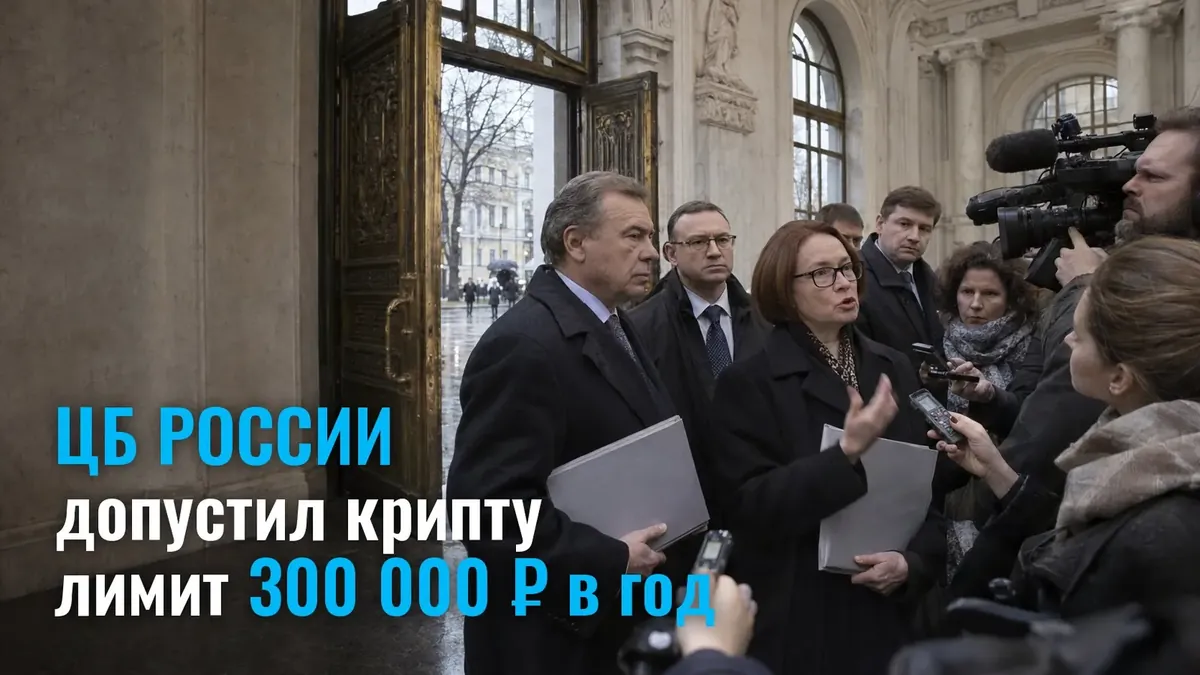
The limit of 300 thousand rubles applies to each intermediary separately, that is, it is counted not per person, but per company. Qualified investors have no restrictions on the amount. Before the first transaction, everyone must pass a test.
Timeline: Vladimir Putin signed the law on a regulated crypto market under the supervision of the Central Bank on August 4, the regulator published the draft requirements on August 11, and the law itself came into force on September 1. In October, the Central Bank allowed Sberbank to provide cryptocurrency exchange services. The Moscow Exchange, the country's largest securities trading venue, will enter the market on December 1 with pilot transactions in the same three assets.
Prohibitions from the same package: direct transactions between private individuals (P2P) will be outlawed from July 1, 2027, transfers from regulated digital accounts to self-custody wallets are already prohibited, and paying for goods and services with crypto is also prohibited.
For a trader, this is a legal but narrow circuit: three instruments, a test at entry, a cap on the amount at each broker and the impossibility of withdrawing coins to your own wallet.
Three hundred thousand a year - is that your position size?
Legalization solves the issue of access, but not the issue of scale: with an annual cap of 300 thousand rubles at an intermediary, even a precise entry into BTC yields a result the size of a side job. In prop trading, the company provides the notional for a trade: you pay for the selection, stay within its loss limits and receive an agreed share of the profit. There is still time until December 1 to see how this scheme works.