

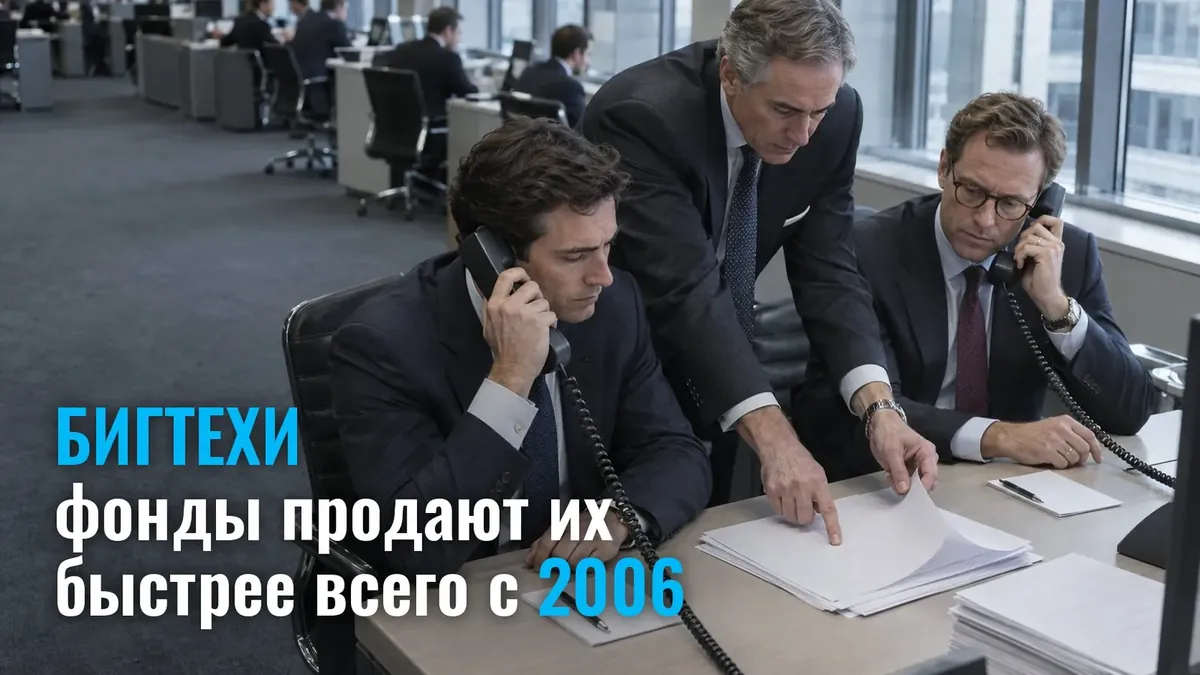
Global fund managers are cutting positions in major tech stocks at the fastest pace since June 2006. The figure comes from BofA's monthly survey. The bank published the November results on November 19, at around 09:00 Moscow time.
BofA conducts the survey every month. It asks managers of large funds around the world what is in their portfolios and what they changed over the month. Big Tech refers to the largest US technology companies by market capitalization.
These securities sit at the top by weight in the S&P 500 and Nasdaq 100. Their sell-off reverberates across the entire index, so the figure matters to anyone who trades indices.
What the November reading showed
The last time funds exited tech this unanimously was more than 19 years ago.
- June 2006 - the previous instance of equally rapid tech selling.
- November 19, around 09:00 Moscow time - release of the November survey results.
- Almost two decades - the period during which funds had not sold tech more actively.
What the survey shows
The survey shows funds' stated positioning. These are managers' own answers about their portfolios.
- No trades or volumes - individual fund transactions are not disclosed in the survey.
- The direction is there - you can see where capital allocators are moving money simultaneously.
Tech and index weight
- S&P 500 and Nasdaq 100 - Big Tech occupies the top spots by weight in both indices.
- Wider than the sector - when funds reduce their share in these securities, the effect carries over to the entire index.
Within a single sector, such a move does not stay contained.
What this means for trading
Key point: tech will have to be kept in a separate window. According to the BofA survey, funds are currently selling it more actively than at any time in almost two decades.
The next reading of manager sentiment will be released in December. Until then there is time to pick a challenge suited to indices.
Were you in tech this autumn?
Funds reshuffle portfolios by entire sectors. A retail trader is constrained by the size of their deposit: the same tech idea on a five-thousand-dollar account yields earnings for dinner. In prop trading, the company allocates the capital for the trade: a paid evaluation of your trading against its risk limits, then its account goes to work and profit is split according to an agreed share. Understanding this mechanic is easier now, while indices have not yet started shifting levels.