

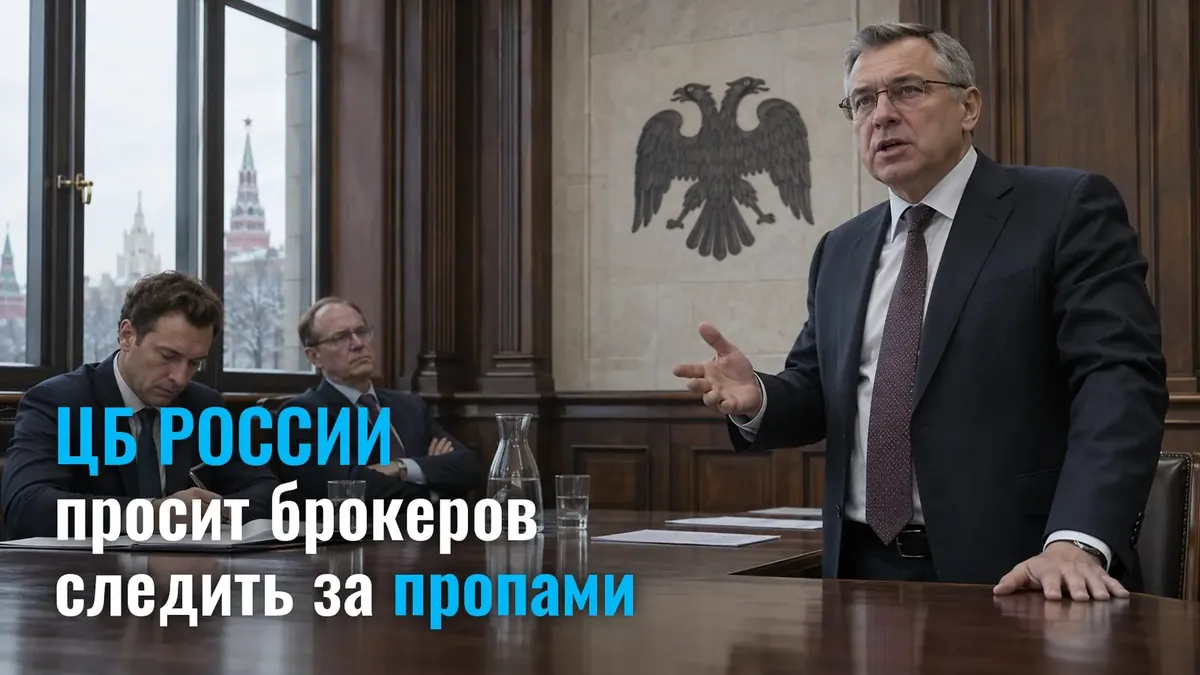
The Bank of Russia has asked brokers to take a closer look at the exchange operations of prop trading companies. The regulator wants brokers to assess how these companies comply with the law on countering market manipulation and insider trading. The notice was published on November 18 at 10:25 MSK.
A prop company gives a trader access to trading on its account. The broker is a licensed intermediary through which orders reach the exchange.
There are no new rules for the trader in the notice. The regulator's attention is shifting to how the trader's company arranges access to trading and through which intermediary the orders go.
Who is responsible for oversight
The path of an order. A prop company does not trade on the exchange itself. Its orders go through a broker.
- The license belongs to the broker - and with it comes the obligation to monitor its clients' operations.
- A separate category of attention - the Bank of Russia proposes that brokers single out prop companies into it.
A knowledge base on prop trading, challenges and payouts is collected in the academy.
What the law prohibits
The law the regulator refers to prohibits two things.
- Market manipulation. These are trades and orders that distort the price or volume of an instrument.
- Insider trading. This is trading on information that has not yet been published and is capable of moving the price.
What changes for the trader
The addressee of the notice. It is written for brokers; there are no new prohibitions for account holders in it.
The main point: questions will be raised about how the prop company arranges access to trading and through which intermediary it routes orders.
The terms and rules for companies can be checked in the prop company catalog.
What is not in the notice
- Effective date - the Bank of Russia did not name one.
- List of companies - the regulator did not provide one either.
- Document requirements - there are no new ones in the notice.
Such a notice does not have the force of a regulatory act. It sets the direction of brokers' checks on trading.
Do you know who your prop company trades through?
You trade, but the account is registered to the prop company, and its exchange operations are now separately monitored by the broker. So it is useful to know the basics. Who your company is, through which intermediary the orders go, which instruments and trading styles are permitted in its rules. The catalog collects this by company and is updated along with the terms. Half an hour of checking is calmer than finding this out on the day a trade is asked to be explained.