

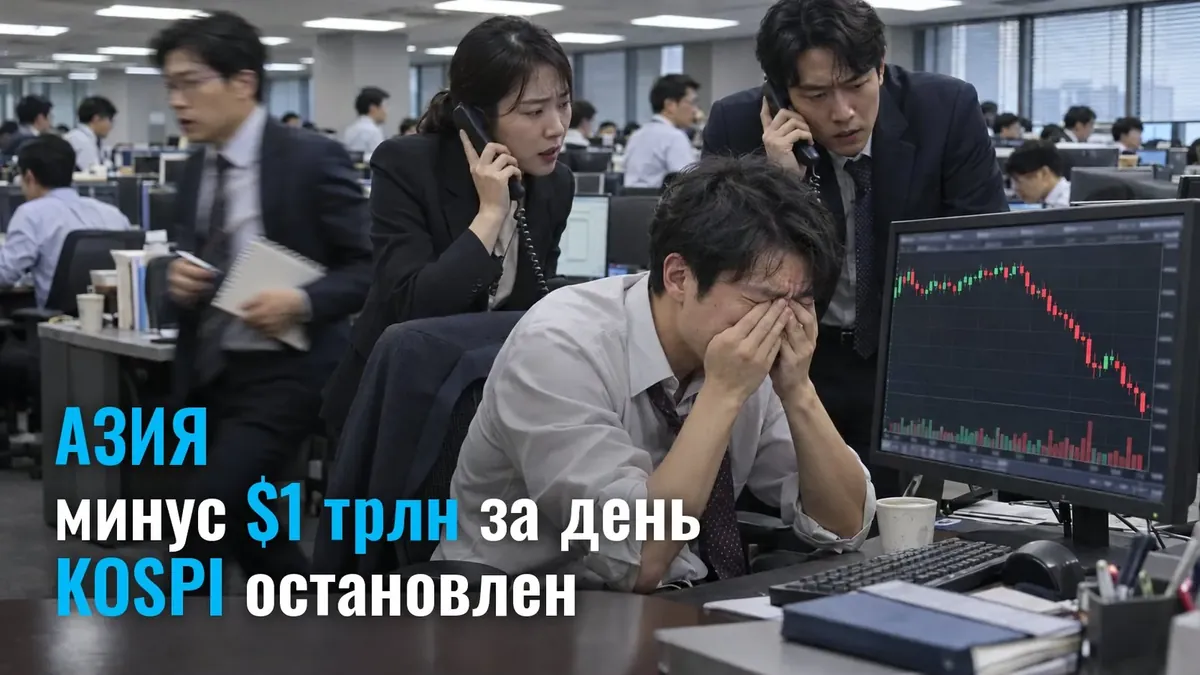
Nikkei 225 fell about 6% and is now 21% below its June record - this is already a bear market (a decline of more than 20% from the peak), down about $450 billion in market capitalization. In Seoul, KOSPI plunged 8.8%, the circuit breaker kicked in (an automatic pause in trading when the move is too sharp), closing at about 4912 points. SK Hynix lost 12%, Samsung Electronics - almost 10%.
The Shenzhen index sits 30% below its June peak (about $210 billion in value), Shanghai Composite -1.1%, CSI 300 -1.5%, Hang Seng -1.8%, and its separate artificial intelligence companies index -4%. Taiwan's TAIEX lost around 4.5% and is also trading more than 20% below its October record.
The source of the blow was the US session: S&P 500 -4.36% to 7353.73, Nasdaq -5.52% to 24 315 (more than 10% below its October peak), Dow Jones -3.44%, the Philadelphia Semiconductor index -10%. Nvidia, Broadcom, Oracle, CoreWeave, Nebius all fell: the market is pricing in a slowdown in artificial intelligence infrastructure spending after the Democrats' success in the midterm elections and stricter rules for data centers. Data on jobless claims added to this - 189 thousand versus a forecast of 197 thousand, close to 1969 levels, which reduces hopes for Fed policy easing.
BTC slid from $80,800 to about $75,500, and within a few hours about $1 billion of leveraged positions were liquidated (forcibly closed), of which 88% were longs. Coinbase shares fell 10-11%, and MicroStrategy (the largest corporate holder of Bitcoin) lost the same.
The reversal was instantaneous: on November 4, Wall Street posted its best post-election session since 1982, with the Dow adding about 1569 points, and on November 5, the Nasdaq erased all of that gain in the first six minutes of trading. The next reference point for the market is the US employment report.
Opened your terminal and saw Asia in the red?
A 6% move in the Japanese index and a trading halt in Seoul in a single session are visible to everyone, but everyone's position size is different. With a deposit of a couple thousand, an index contract either doesn't fit into the margin at all or hangs on by a thread. In prop trading, the trading notional is provided by the company: you pay for selection, comply with drawdown limits, and receive an agreed share of the result on its account. Such weeks repeat, and it's better to understand the scheme before the next one.